The tank in the woods

The post landed with a loud thump. It was a package from my sister containing two old issues of “After the battle.” Why was my sister sending me thirty-year-old magazines on the machinery of war?
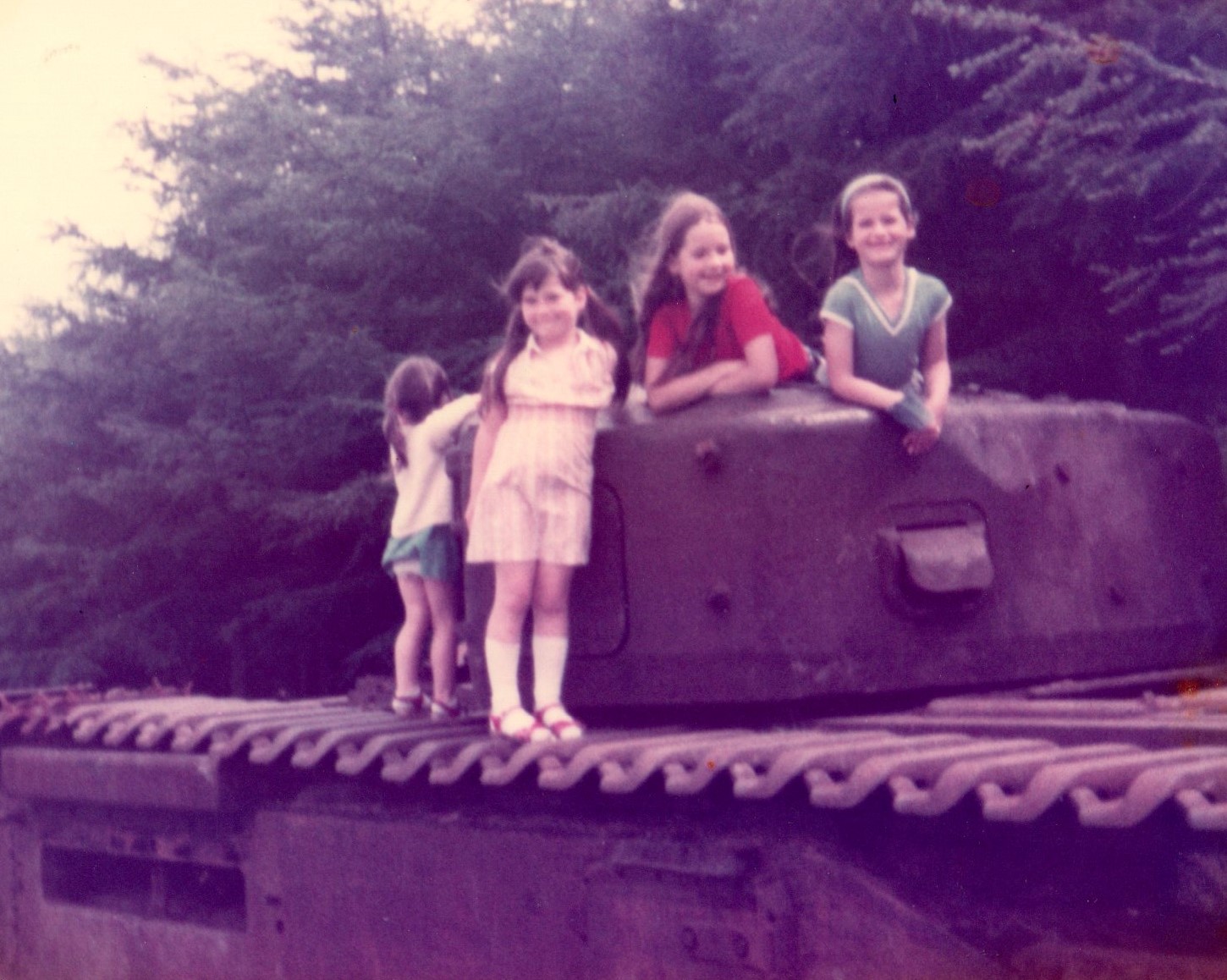
The tank in the woods, with my sisters & I. Own collection.

This picture above provides the connection. My sister had been walking the paths close to our childhood home and remembered the decrepit but much loved tank in the woods. “I was thinking about my connection to the area, and the land, and the top land, then the area round it, and we walked that way, and I was telling […..] about it. Then I was thinking it would be great if we could find the spot where it was.”

The tank in question was a Churchill Mk II. Once belonging to C Squadron, 9th Battalion, Royal Tank Regiment and she had become bogged down on Stainburn Moor in 1941. In the 1950s the Forestry Commission planted the area with spruce trees and the tank must have slowly been forgotten by everyone but those who lived close by. People like us for whom the tank was like a piece of playground equipment in the middle of the woods.
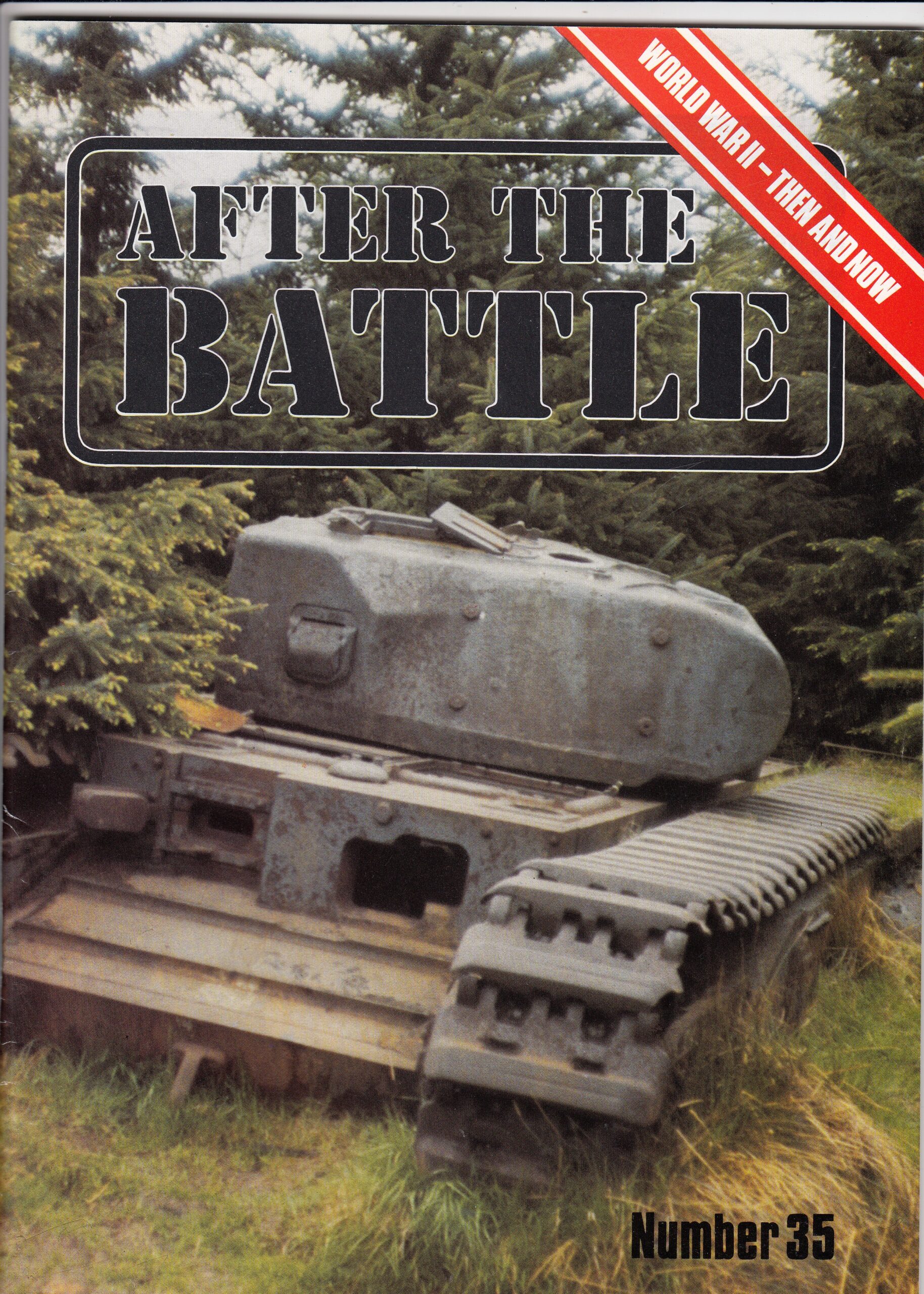
After the battle – issue 35 – featuring our tank on the cover. Own collection.
After the battle – issue 46 – describing the tank recovery. Own collection.

When a local resident sent a picture into “After the battle” in 1982 our tank became a cover girl. Someone, somewhere decided she was worth saving and by 1984 the tank had been recovered and taken to the Museum of Army Transport in Beverley. When that Museum closed in 2003, she was moved to the Tank Museum in Dorset where she remains to this day. As the only Churchill Mk II in the country, she even has her own YouTube video. Tank Chats #112 | Churchill Mk I and II | The Tank Museum.
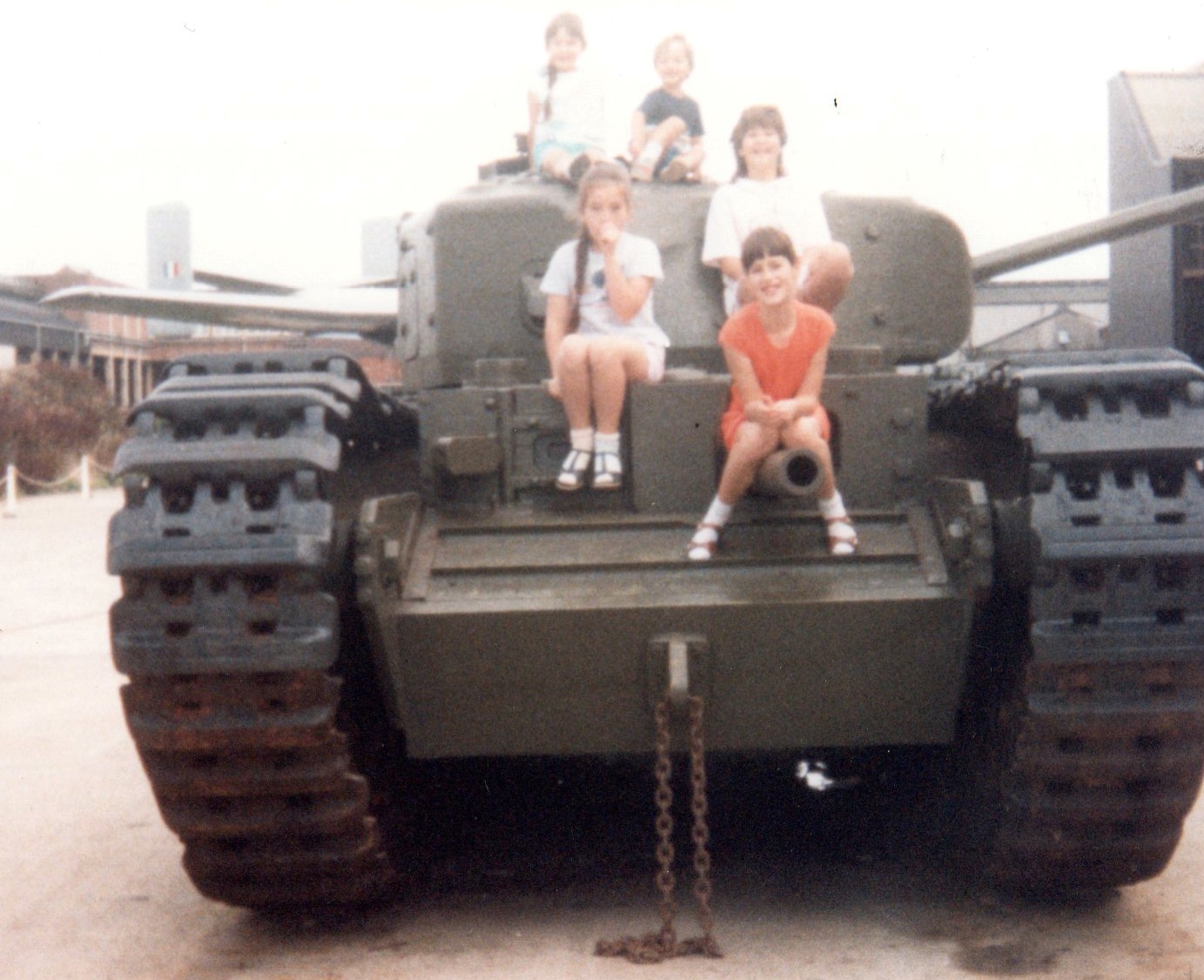
“Our” tank, on a family trip to the Museum of Army Transport. Own collection.

Today was a wonderful reminder of the many strange paths family research takes you down. With much gratitude to my sister Helen for researching this lovely snippet of our family’s history.  

A postscript

Paul Towers is my third cousin through Amelia Bradbury & Michael Houseman, my Grandma’s paternal grandparents. We now know we are relatives through at least two other branches and, as Paul grew up in Leathley, he also knew my Houseman Uncles from school. Yet it took a myheritage DNA match for us to connect as fellow family history geeks. In the last six months I’ve learnt how much his commitment to sharing family history has helped me with my own. Thanks to my sister’s own research I can start to return the favour because, as it turns out, Churchill tanks & Bovington tank museum link directly to his father, Bob.
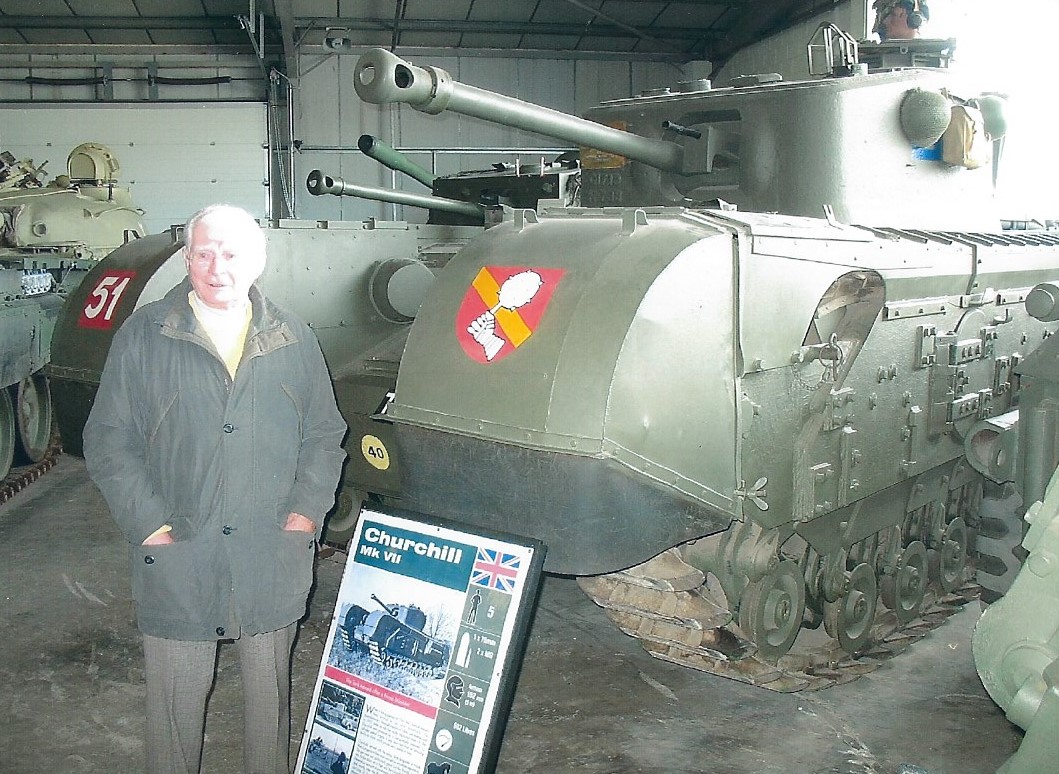
Bob Towers at Bovington. Paul Towers photo.

I knew my dad had been in tanks during the war but he never, ever spoke about it. Then, the Washburn Heritage people got in touch for a story about locals who had served for their oral history project. I think it was this that opened him up. He knew he was in the twilight of his life and he told me he wanted to go to the Tank Museum at Bovington, Dorset. I booked a local pub and we went down for a couple days. He took some of his photos and papers from the army for them to copy or keep. On meeting the curator he was extremely grateful. Dad had been in the 7th Royal Tank Regiment and the museum had no artefacts regarding them at all. The attached photo is him standing next to a Churchill similar to the one he was in. The following summer dad said he wanted to go again, so I booked the same pub, but this time I rang the museum and spoke to the curator. When we got there he was waiting for us, he gave dad a transcription of the 7RTR war diary and took us to the display where dad’s memorabilia was on show. I swear he was close to tears“. 

Who could have asked for a more perfect postscript to connect the past to the present?

Two families, one community & a spurious link to Bonfire Night

Taken on Farnley Estate in the 1950s. Two families, one community. Own collection.

On a quiet Friday evening with nothing else planned I pulled out a few photos from the little leather suitcase determined to make a bit more progress on scanning & labelling the contents. Studying photos of my Nana & Grandpy (Mum’s parents) always puts a smile on my face and my wonderful Mum is always willing to share what she knows as I try to place the time, place and people.

At first glance I didn’t think it particularly special, some 1950s event at Farnley Hall where key community members, including my Nana, were invited. Whilst I love trying to make sense of these formal black & white photos, which may or may not have been published in the local newspaper, they don’t tend to offer anything more than a simple family snapshot does.

Then I studied the photo more closely and realised it featured not just one set of grandparents but two together with several more relatives including my Great Grandfather, Jesse Houseman.

Every living adult ancestor we had at the time was on this photo, taken together as one community, long before the two families were united in marriage.

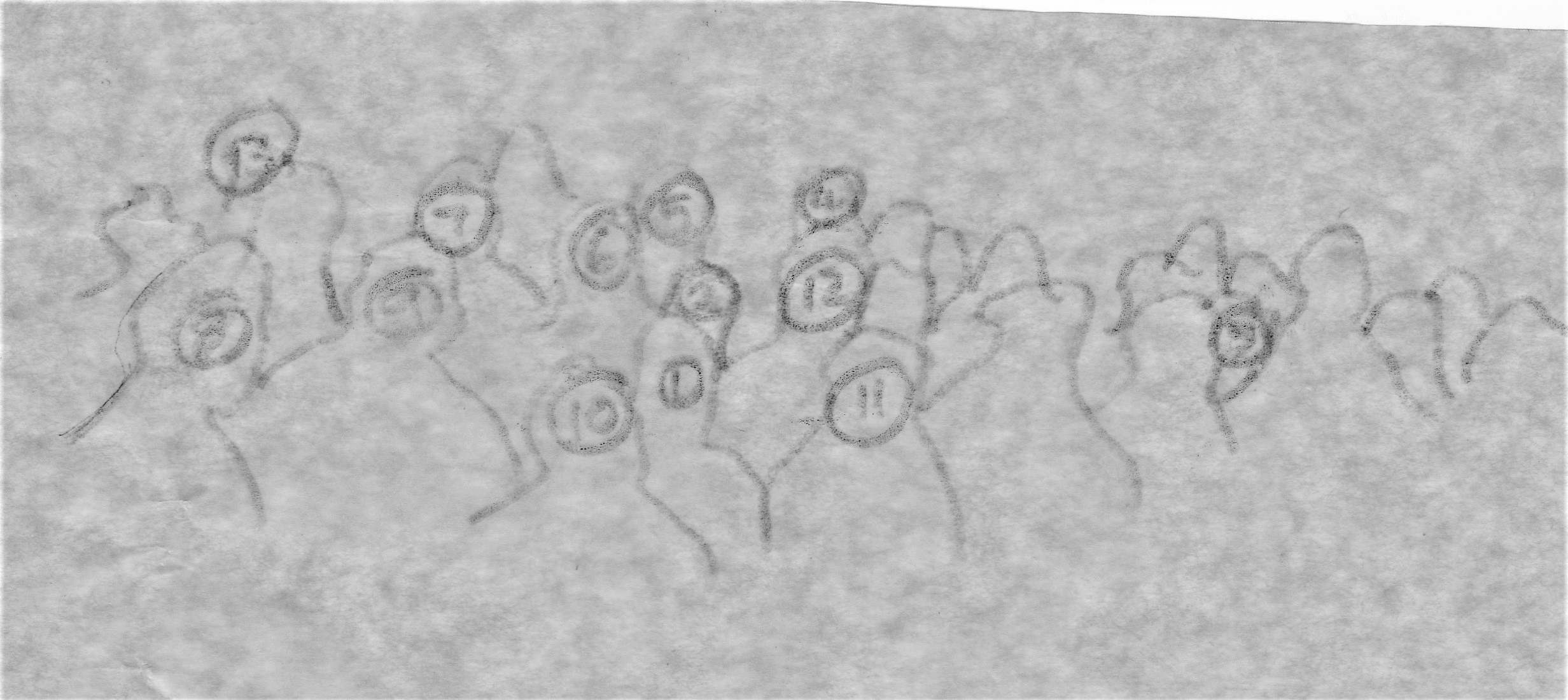
A little bit of greaseproof paper & bad drawing may help, or may not! 1) Nana 2) Grandpy 3) Grandma 4) Grandad 5) Jesse Houseman (my great grandad) 6) Jessie Houseman 7) JB Liddle 8) Nicholas Horton-Fawkes 9) Reg Snailham 10) Clarice Snailham 11) Marian Barrett, 12) Robbie Trotter 13) Gilbert Trotter

Nana is fourth from the left on the front row, handbag on her left arm. Left of Nana are Clarice & Reg Snailham, neighbours from Stainburn, right of Nana is Marian Barrett, wife of Grandpy’s brother, Henry. Grandpy is stood behind Nana, face half hidden. Whether Nana was shy or (as I remember) someone who always put others first, you only have to look at the front row of shoes to know she wasn’t one who fought for limelight.

Then look along the front row and spot the woman peeping over the suited man’s shoulder. That’s my Grandma, my Dad’s Mum. She was not an attention seeker, but she also wasn’t a woman you would overlook. Grandad is at the back, bang in the middle, by far the tallest of my Grandparents so that placing makes sense. To his left is my Grandma’s Dad, my Great Grandfather, Jesse Houseman. This dates the photo to post 1954 when his wife, my Great Grandmother, had died.

The woman to the left of Jesse is Jessie, his daughter & my Grandma’s sister and to the right of her, her husband, JB Liddle. Grandma had one other sister, Muriel. Muriel’s brother-in-law Gilbert is right at the back left, face half hidden. Robbie Trotter, another of Muriel’s brother-in-laws (who according to my Mum was “allowed to go out” with my Grandpy & his brother because they were sensible and didn’t drink & drive) is prominent centre second row pushing Grandpy out of the way…

Two families, one community, long before marriage brought my two branches together.

And the spurious link to bonfire night? Guy Fawkes is believed to be a descendent of the Fawkes of Farnley. The man front left of this photo holding some papers is one Nicholas Horton-Fawkes, at the time, local landlord and owner of Farnley Hall, where this photo was taken.

With much gratitude to my Mum, who is always there when I want to ask questions about photos, to my Nana & Grandpy for keeping this amazing photo and to Grandma, Grandad & Great Grandfather Jesse for all being present on this day.

An almost Yorkshire story – the podcast version

Writing this blog is principally about bringing our ancestors to life in an engaging and accessible way with the hope that their stories get shared and remembered now and in the future. That’s my primary goal, but it’s not my only one. It’s also about me learning to be a better writer, storyteller & communicator. So when Tina offered me the chance to record a podcast interview for waffle-free family stories, I took it.

We talk about her grandmother’s role in getting her hooked on family trees, how she’s giving life to the women in her story, the horrible accident that led to one child shooting another, and right at the end, she gives you THE BEST conversation ice-breaker you’ll ever know.

In between all that chat, she talks about the tools and techniques she uses to get as close to the real story as possible, and how she plugs the gaps”

I’d say that our family history really is all about wonderful women and that I haven’t quite lost my Yorkshire accent! Avid readers of this blog may notice the odd mix-up I had with names but don’t let that distract from the storytelling.

Here are the links to where you can find out more about the women (and men) I talk about.

How I started

Mary Ann Gill

Elizabeth Furniss & George Downs

Elsie Moody including the photo I used to resemble

Elizabeth Dean and the Butterworth connection

Hannah Demaine, the woman who married twice

Widow paupers including “Wid Swinden”

The Wellocks

Walter Scott, the boy who was shot by his friend

With much gratitude to Tina Konstant, for giving me space on her podcast, and also to Natalie Pithers, who runs the Curious Descendents Club which is how I met Tina & is also where I am learning to write better stories.

Me, car, YFC: Dad in three words

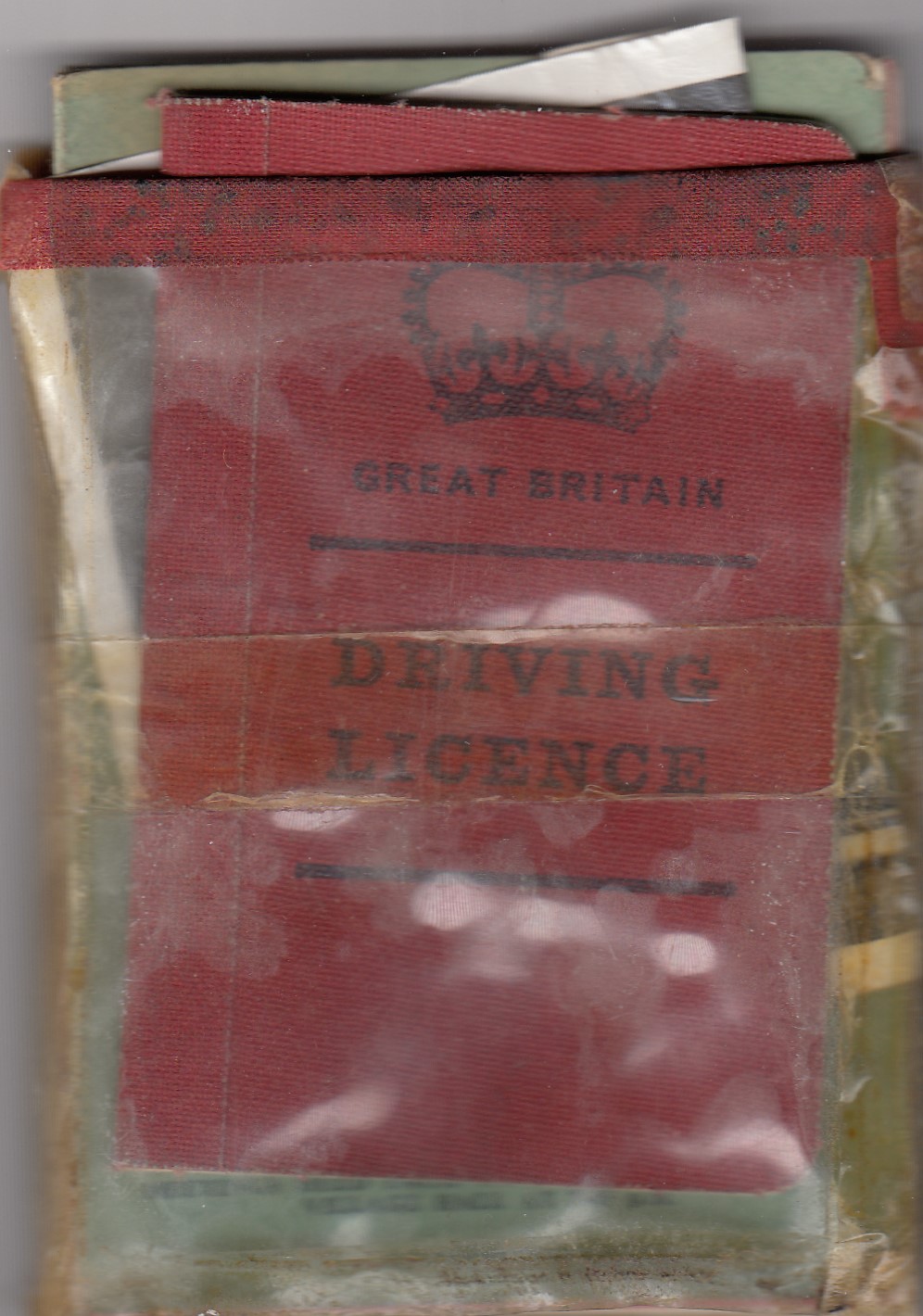
My Dad’s plastic wallet. Own collection. Although I may have decided that preserving the contents was more important than the preserving the wallet.

The plastic wallet may be dirty, cracked and held together by Sellotape but the contents almost perfectly sum up what was important to my Dad (George Christopher Houseman aka Bob) as a young man. As my Mum put it when I asked her about the wallet “Me, car, yfc were intertwined.”

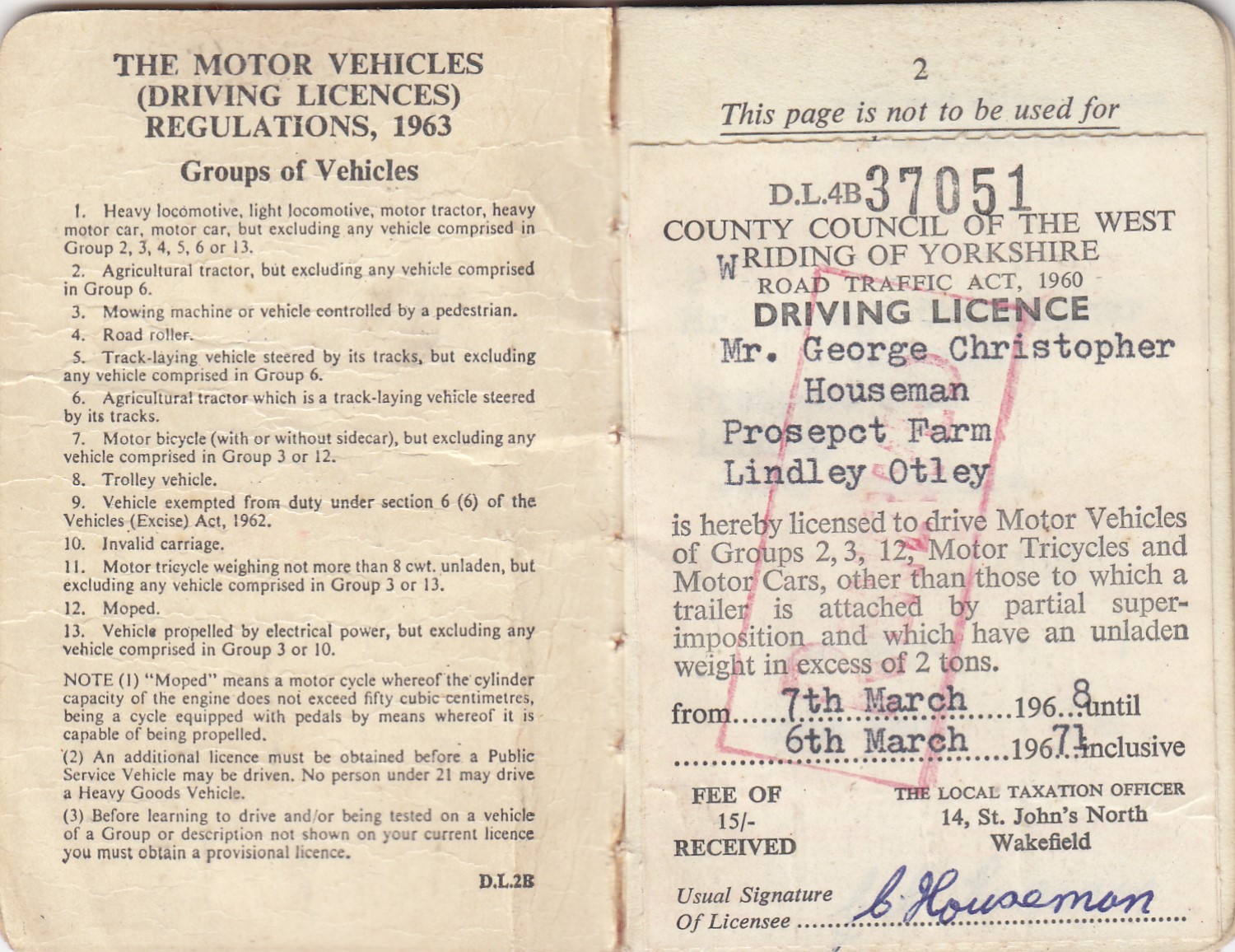
My Dad’s driving licence. Underneath the full licence is a provisional one dated from 1 September 1967. Own collection

First there is the driving licence. The provisional licence was issued on 1 September 1967, the day after my Dad’s 17th birthday. I am a little surprised that it took him until six months to obtain the full one as it took less than four to get mine…..

Farnley Estate YFC programmes from September 1962 to August 1971. Own collection.

Then there are the Farnley Estate YFC programmes spanning the years from September 1961 to August 1973, missing only the year 1971 – 1972. Comparative to the rest of the family Dad was a late joiner of the YFC in 1961 at the grand old age of eleven, because, as my Grandma wrote “he could not stand late nights.” These programmes track the lives of both sides of my family. In 1961 my Grandad, Mr G Houseman, was an advisory member, my aunt Christine, Miss C Houseman, the notice and scrapbook secretary. By 1969 my Mum & her brother Richard start to make an appearance. Whilst Mr & Mrs G Houseman are both now part of the advisory committee and Miss C Houseman has been promoted to treasurer, Mr R Barrett has been appointed as vice chairman and Miss A Barrett as minute secretary. My Dad just scrapes in as regional rep alongside both Christine & Richard. Richard is elected as chair in 1969, my Dad in 1970, Richard again in 1971 – did the two friends stand against each other or agree to take it in turns? And the one missing programme tells its own sad story, as it’s the year my Uncle Richard died. The heart went out of the club that year.

Elizabeth Ann Barrett on the doorstep of Upper West End Farm, kept in my Dad’s wallet. It’s a pink ribbed top and the outfit would have been made either by my Mum or my Nana. Own collection.

Last is the photo of my Mum, stood on the back doorstep of Upper West End Farm, Stainburn in a dress she likely sewed herself. The fact that it is folded, creased and torn is testament to the order of “Me, car, YFC” – it was a love story until its end.

Martha Handley (1830 – 1921) & William Clapham (1829 – 1893)

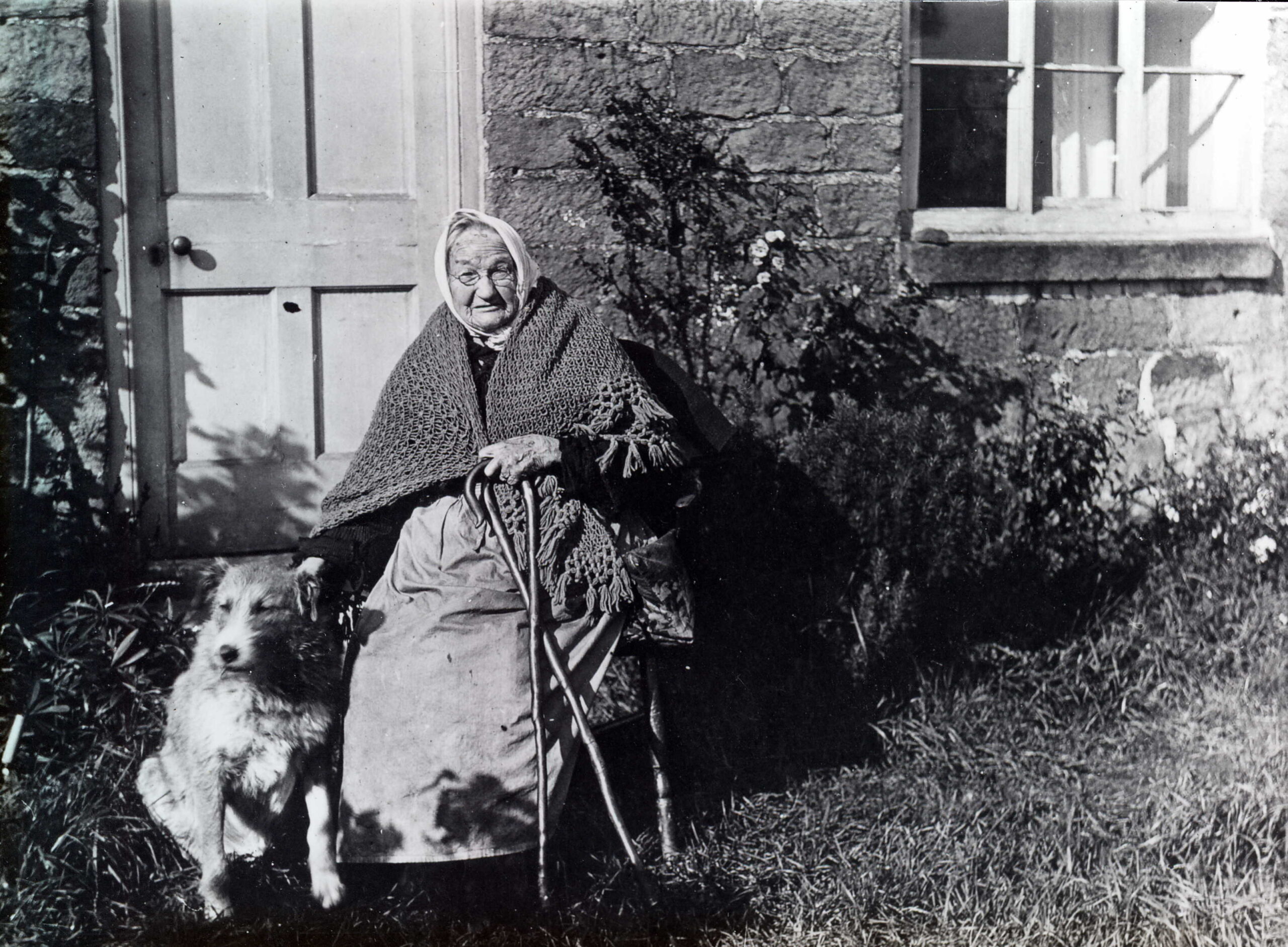
Martha Handley, from Justin Clapham’s collection

This is part of a series of brief biographies of earlier ancestors.

On Monday, 1 March 1920, Martha would have been celebrating her 90th birthday. It had been a fair February that year so perhaps Martha sat on her front doorstep of Blaeberry Croft cosily wrapped in her woollen shawl and headscarf with her faithful dog by her side. How might she be reflecting on those past ninety years?

Martha had lived her whole life in North Rigton, a compact Yorkshire village situated towards the top of a hill. It’s a popular place these days, just a few miles to Harrogate, close to Weeton station giving easy access to Leeds and beyond, with an excellent primary school and a welcoming pub.

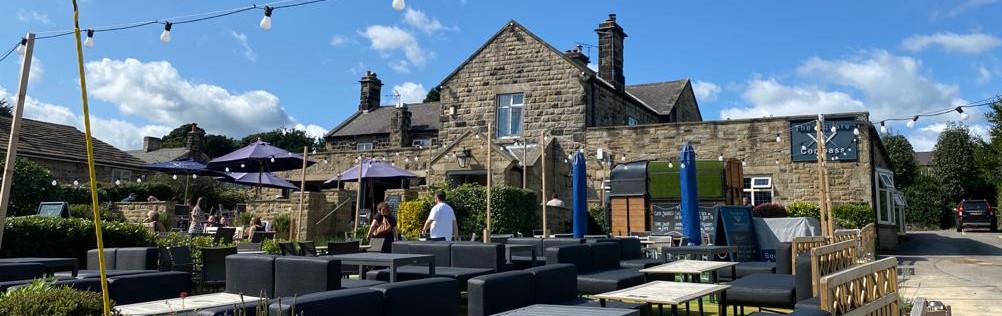
The Square & Compass today, own photo

During Martha’s childhood it would have felt very different. Yes, the Square & Compass served ale of course, to the men of the village, but it also acted as the place where inquests and other village meetings were held. The church wasn’t built until 1911 . A methodist chapel had been built in 1816 but was replaced in 1932. Farming was hard and winters bleak. Harrogate and Leeds would have felt another country.

Early twentieth century postcard of North Rigton, from www.northrigton.org

Martha was the youngest of five girls and, for a period of time, very much the baby of the family until joined by her illegitimate niece, Matilda. Her older sisters ranged in age from five to sixteen and when she was born in 1830 Martha’s parents, Sarah Halliday & John Handley, likely despaired at the arrival of yet another girl. John was a gamewatcher and farmed a few acres, a precarious existence which relied on sons for labour in their youth and the “pension” for parents in their old age.

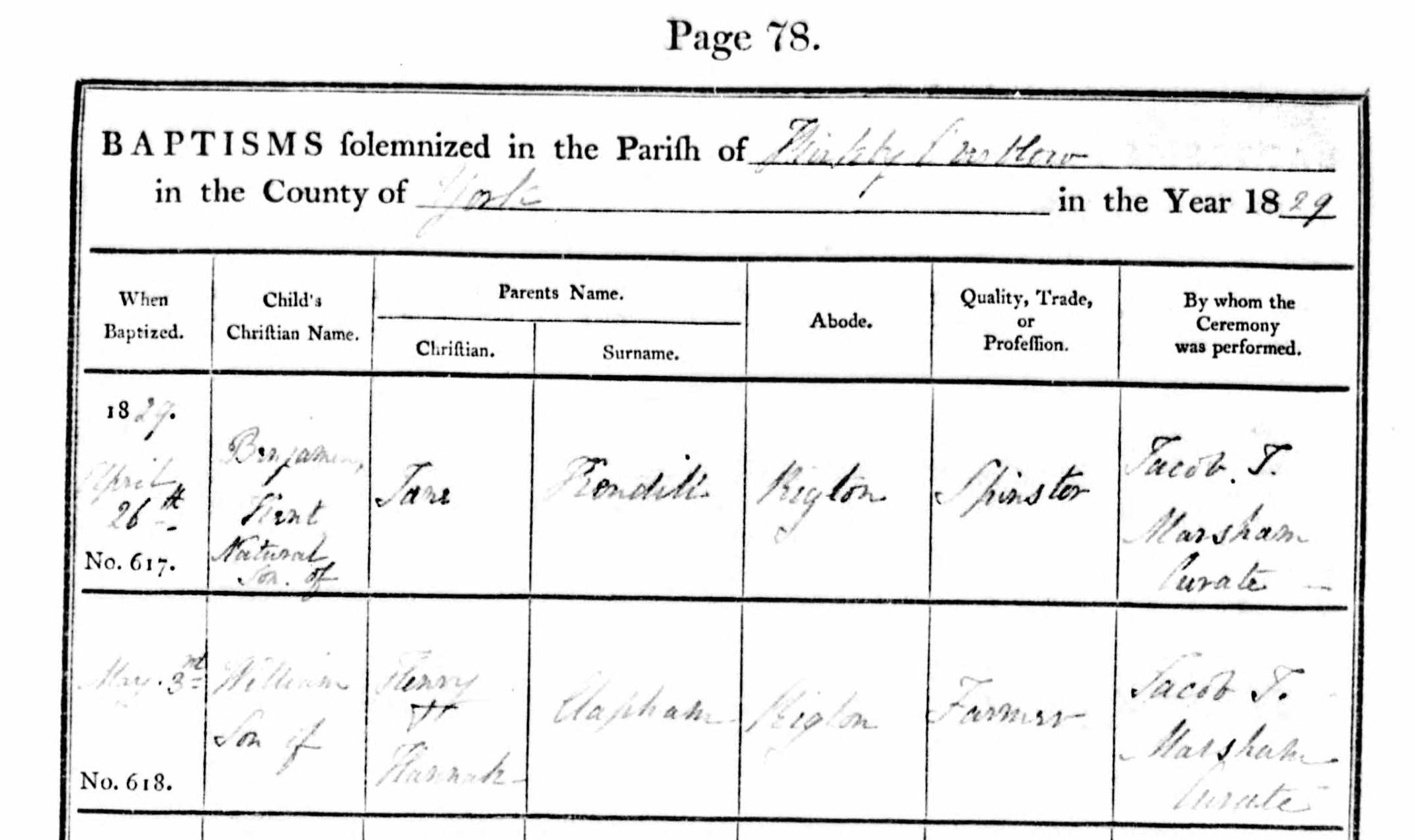
Baptism record of William Clapham at Kirkby Overblow, 1829, showing parents as Henry & Hannah Clapham. Note: there was a second William Clapham baptised at a similar time, but 1841 census & William’s marriage record ties to this one.

Then there was William. Likely also a baby of the family as his parents, Hannah Hardcastle and Henry Clapham were aged around 45 and 60 when he was born on 12 March 1829. The Claphams were tenant farmers also living in North Rigton where their family had lived for many generations.

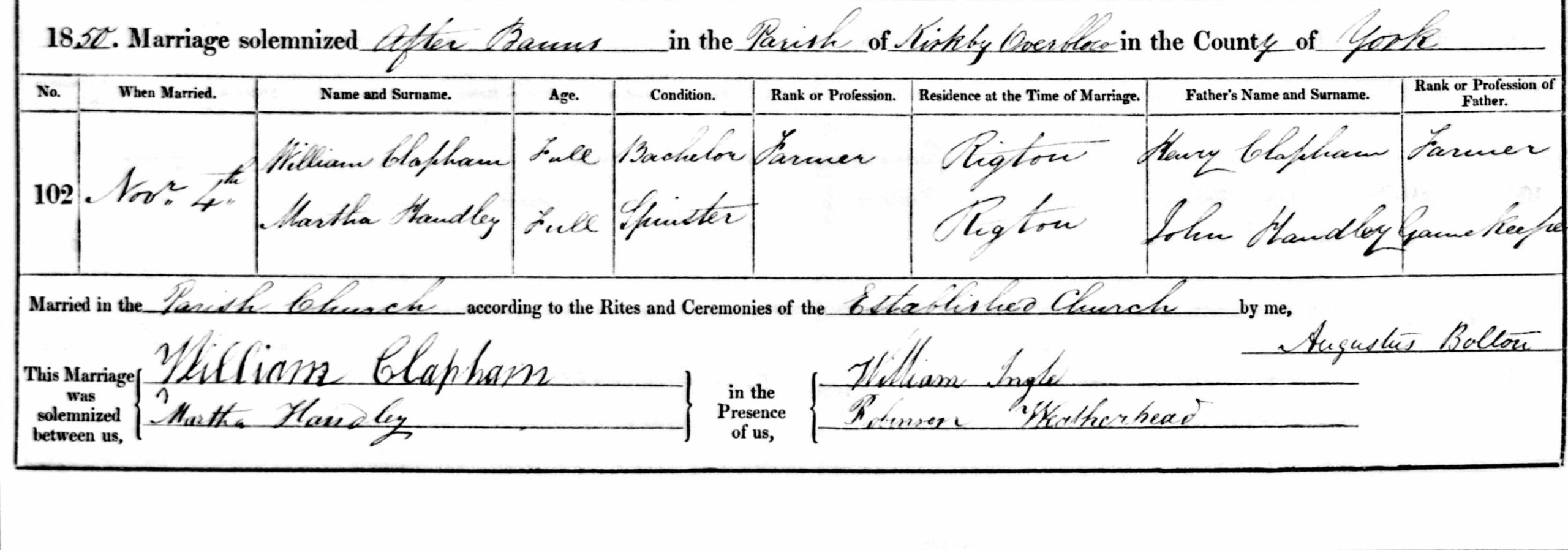
William & Martha were close neighbours, listed on adjoining pages in the 1841 census, and on 4 November 1850, with William having both become the head of household following the death of his father and attained the age of twenty-one, the pair were married at Kirkby Overblow church.

Marriage certificate of Martha Handley & William Clapham,. Kirkby Overblow, 1850

Martha’s reflections likely moved on to her married life and that of her family. Nine children arrived in quick succession all surviving to adulthood. Samuel, the eldest, born in 1854, married to a local woman, with four children all already married, ten grandchildren and more to come. Martha might even have had a letter in her hand from Samuel’s son, William, who had emigrated to Canada a few years ago. Joseph, her baby, born in 1871, had got married in Hartlepool, but had thankfully chosen to come back to nearby Fairview Farm, so Martha would have regularly seen his six children. Samuel & Joseph were doing just fine.

It was the middle children Martha worried about. Henry (b. 1856), Hannah (b. 1858), William (b. 1861), Abigail (b. 1866) and Mary Grace (b. 1870) had all remained unwed. Henry had died in 1902, but the others were all still living close by. They supported each other with the sisters acting as housekeepers for the brothers and Mary Grace still living at home with Martha, but was that a life? And of course Sarah (b. 1859) – did she marry, die or disappear after 1881? I haven’t been able to trace her, but Martha would have known.

Then there was Martha or Marie as she now liked to call herself. Born in 1863, she’d always thought differently. As a young country girl she used to tramp the 12 miles to attend the meetings of Charles Bradlaugh.” Marie was married to John Greevz Fisher and living in Leeds. Her five children, Auberon Herbert, Wordsworth Donisthorpe, Constance Naden, Spencer Darwin and Hypatia Ingersoll were named after anarchists and radical philosophers. Marie was a militant feminist and active suffragette and deserves her own story but right now, sat on her Rigton doorstep, Martha must have wondered how on earth she’d come to raise such a daughter.

The time for sadness would come later, when, perhaps one of Martha’s children would take her on the short trip to Kirkby Overblow church. After more than forty years of marriage, William had died on 13 December 1893 and was buried where the couple married, in Kirkby Overblow together with their son, Henry. That would be the time for sadness and in the meantime, Martha could be happy with her ninety years, surrounded by her family in the village she was born. Martha was to die the following year on 29 March 1921 and was buried with her husband at Kirkby Overblow.

Martha Handley, from Justin Clapham collection

With much gratitude to Martha Handley & William Clapham, my great, great, great grandparents through my paternal Grandad, for bringing up such a wonderful family.

A brief addendum

Sarah didn’t, as it turns out, disappear. She married Richard Hallewell, moved to Armley and had two children, Mary Ellen & Richard Bertram. Indeed, Mary Ellen was staying with her grandparents at the time of the 1891 census which is a reminder to double check all the available evidence. Sarah was widowed sometime between 1909 and 1911 and ultimately moved back to the area.

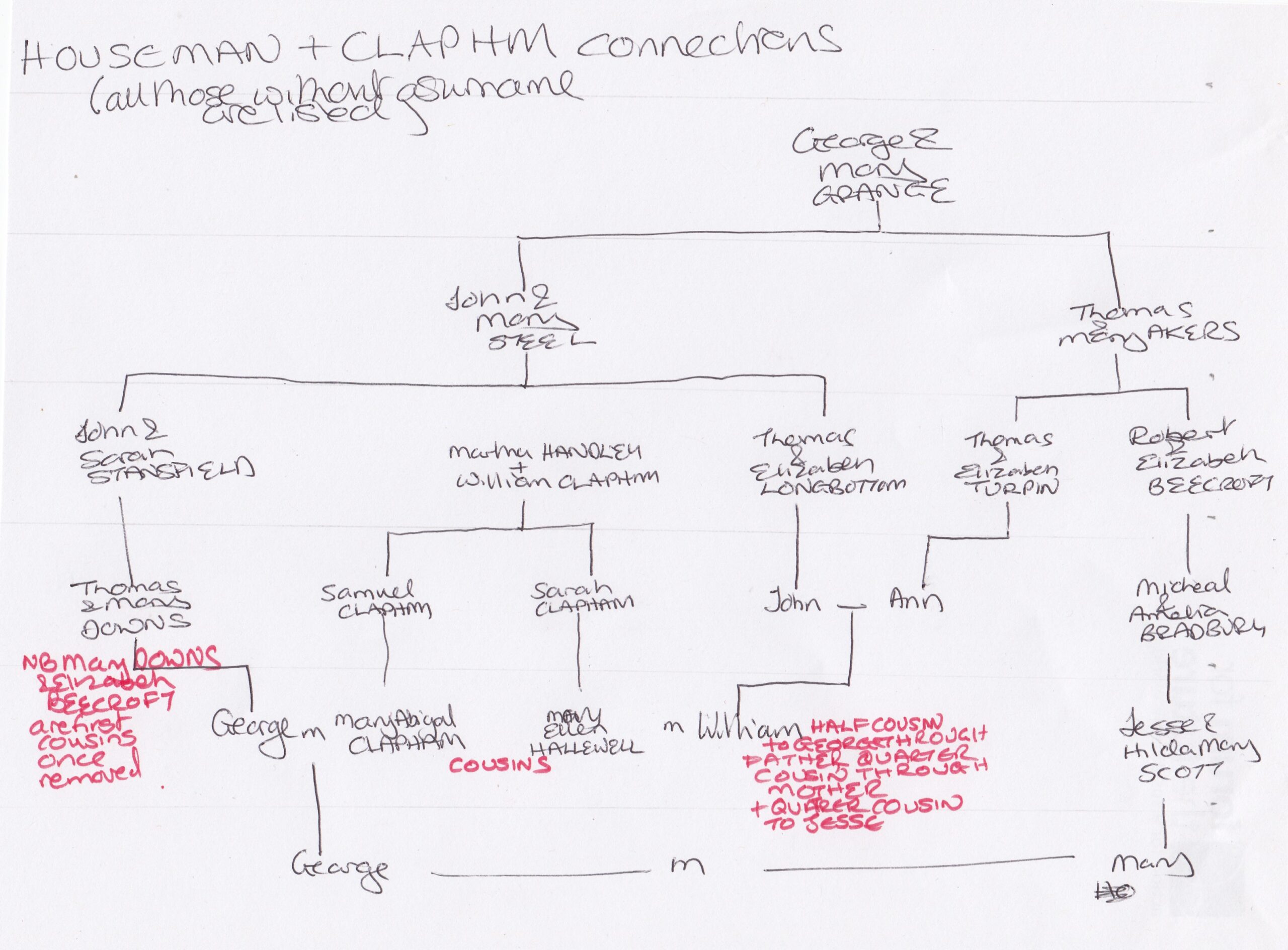
In 1909, Mary Ellen married one William Houseman and moved to Felliscliffe looping right back into our family. It possible the two would have met when her cousin and my great grandmother Mary Abigail Clapham married George Houseman in 1906. William & George were both second cousins through William’s father, John Houseman, and third cousins through his mother, Ann Houseman. Incidentally this also makes William as closely related to Jesse Houseman, my Grandma’s father as it does to George, my Grandad’s father.

A diagram helping to illustrate the connectedness between cousins Mary Abigail & Mary Ellen’s husbands.

Although I have now identified Mary Ellen she was still absent from Martha’s 90th celebrations as she had sadly died the previous year.