Betty Beecroft (1811 – 1882) and Robert Houseman (1806 – 1865) – an illustration of the (lack of) Victorian women’s property rights

Caroline Norton (1808 – 1877) was almost Betty’s contemporary. Married young to an abusive & jealous husband, she left her husband in 1836. At first, she attempted to subsist on her own earnings. Then her husband went to court to claim this money as his leaving her penniless. He also, legally, took sole custody of her three sons. Caroline became a tireless political campaigner and is credited with doing much to ensure the introduction of the Custody of Infants Act 1839, the Matrimonial Causes Act 1857 and the Married Women’s Property Act 1870 which started to create the conditions for women to become legally separate people. Betty’s story is an illustration of why Caroline’s work was so necessary for women of Betty’s era were defined by her relationship to a man.

Betty Beecroft was likely the second of the two children of Faith Bell & Luke Beecroft. Betty’s elder brother, John, was born on 8 August 1808 almost exactly nine months after their parent’s wedding on 1 November 1807. He was promptly christened at Pateley Bridge. What date or even what year Betty arrived, however, is somewhat more difficult to determine…. What we know for sure is that Betty was baptised on 6 April 1817 at Thornthwaite. Ages in later documents would suggest a date of birth anywhere between 1809 & 1816. Was she already eight by the time she was baptised which would have meant having her last child at forty? Or was she still a baby at the time meaning she married at the tender age of nineteen to a man ten years her senior? My guess is closer to the former than the latter, but a guess is all it can be.

Robert Houseman’s date of birth on the other hand was clearly listed on his baptism record, also at Thornthwaite, as 2 March 1806. He was the twelfth child of fourteen, his parents, Mary Akers & Thomas Houseman being much more productive that Betty’s!

Childhood for Betty was likely largely uneventful or at least, as is often the case, any events went unrecorded. Until her elder brother John died, unmarried and childless, in 1832. This must have come as a shock to her parents. Betty’s father, Luke, was around 65 by now and seems to have amassed a reasonable bank balance from running the New Inn in Darley. Without a son to inherit the business the monies would come to Betty, the daughter whom he hadn’t even seen any hurry to get baptised.

Was this when Robert started to express an interest in Betty? As a twelfth child he would certainly need to have made his own way in the world and a daughter, who was now an only child, would have been an attractive prospect.

Whatever the intent, Luke was obviously determined to protect the interests of his daughter and any potential grandchildren. Luke wrote his last will and testament was written on 11 March 1835 six months before Betty & Robert married (8 September). Luke died before the year was out, buried at Hampsthwaite on 23 December. Whilst various assets were bequeathed directly to his nephew, Betty’s share would be held in trust to be managed by friends, Thomas Petty & Thomas Skaife. The “rents issues and profits” would be paid to Betty’s mother first and on her demise to Betty. But the assets themselves would only be divided between any lawful children on Betty’s death. In other words, Betty received the income and not the assets – important in this era where a woman’s property automatically became that of her husbands on marriage.
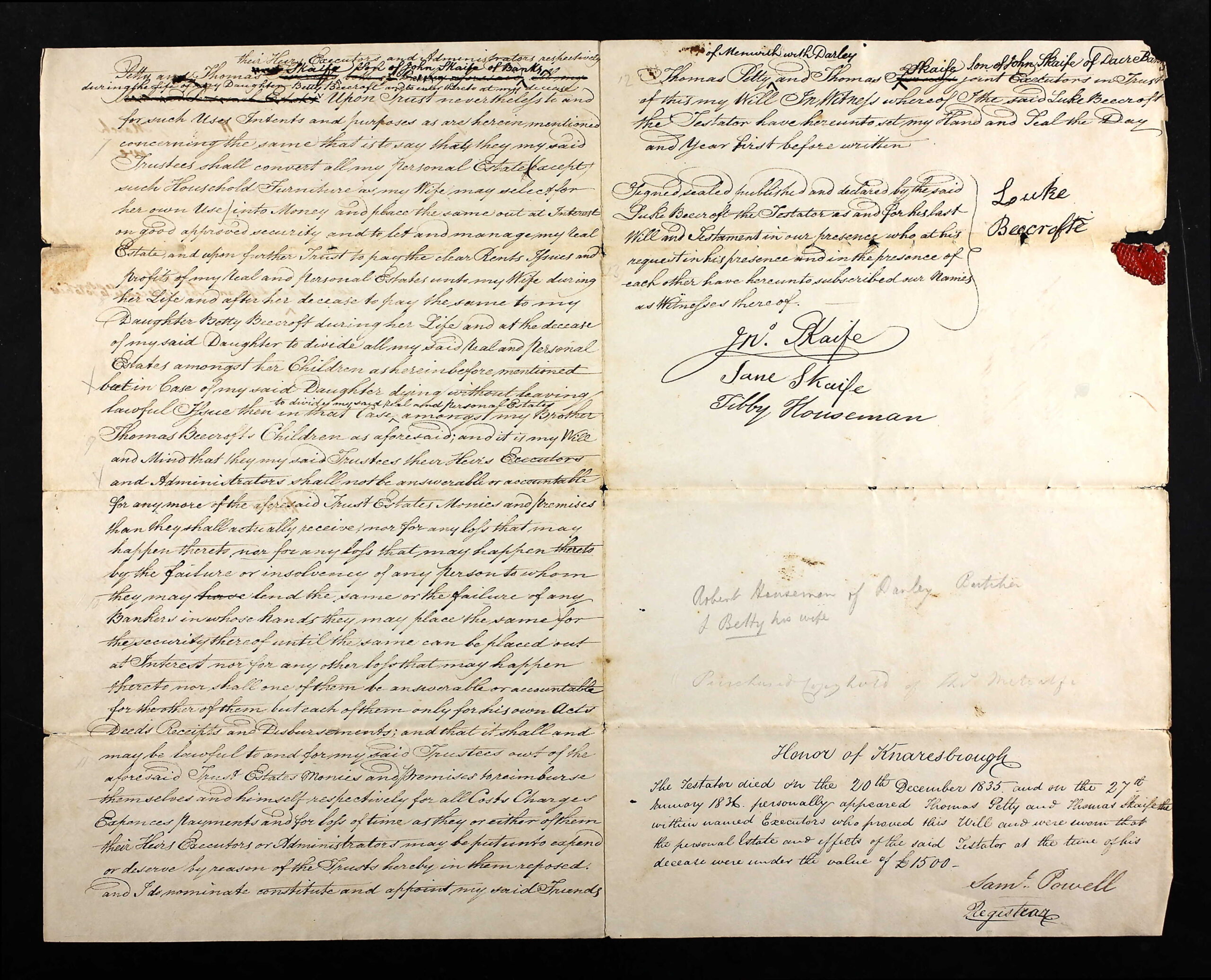
Luke Beecroft’s will, 1835.

The money wasn’t entirely free of Robert’s influence, for life in a small village is intimately connected. The above-named Thomas Skaife, trustor for Betty, had a sister, Tibby, who just happened to be married to Robert’s cousin John. Then there was Benson Skaife, cousin of Thomas Skaife, husband of Robert’s sister, Mary, and one of the witnesses at Betty & Robert’s wedding. Benson was sadly to die just a year after the marriage and his son, Joseph, came to live & work for the couple. Benson & Robert may simply have been good friends but another connection to the Skaife family can’t have harmed Robert’s case.

For there was money at stake. Luke’s estate was valued at something under £1,500 including £970 deposited in cash. The national archives currency convertor suggests that £970 was equivalent to approximately 4,850 days wages for a skilled labourer, which is more money than any skilled labourer on average wages could ever hope to amass.

Betty & Robert benefited from the “rents issues and profits” throughout their married life as Faith, Betty’s mother, came to live with the young couple and their growing family. Children arrived at regular intervals: John Beecroft (1837), Thomas (1838), William (1840), Michael (my great, great grandfather) (1842), Ann (1845), Joseph (1847) and Benjamin (1849). Faith would have likely helped her daughter deliver all seven of these healthy babies.

I believe that Betty & Robert would have been living at Red Syke Farm, Thornthwaite for much of their married life although the first actual evidence of address is not until 1871. This farm was to pass from father to son for at least two further generations. Luke had set his daughter & his grandchildren up well.

All seven children survived infancy, but four (William, Thomas, Ann & Joseph) were to die as young adults before marriage, three of them before Robert’s own death from consumption on 25 October 1865 at the age of 59.

Robert’s will was written just a month before he died. In it he sought to “give and bequeath unto my wife Betty Houseman the residue and remainder of my property the whole of my farming stock of whatsoever kind also the whole of my crops my hay corn straw and the [xx] of all the land also the household furniture and everything within and without that is the whole of my property whatsoever and wheresoever until my youngest son Benjamin attains the age of twenty one years and then my will is that the whole then remaining shall be sold and the money arising therefrom shall be equally divided amongst all my children.” The property was not left solely to the eldest son, but is instead split equally between all, perhaps reflecting the equality seen in the will of his father-in-law, Luke. Strangely too, it is his fourth (albeit second surviving son), Michael, who is appointed as executor and it takes nearly seven years for probate to be received. There’s a hint, perhaps, that the relationship between father and oldest son (John Beecroft) wasn’t entirely happy, and whilst John Beecroft was at his father’s side when he died, he may have been living some twenty-five miles away in a village called Aberford where he marries in 1869.

Whatever the family dynamics it is Betty who, in 1871, is named as head of the household and farmer of 37 acres in the 1871 census despite the return of John Beecroft and his new wife. By 1881 Betty has moved to Folly Gill with her youngest son Benjamin and is no longer the farmer. Instead she is an “Annuitant” benefiting still from the provisions in her father’s will.

Betty died on 19 August 1882 from an apoplexy fit. Aged 73 according to her death certificate, or 71, or maybe only 67 if you believe other records. She’s buried with Robert and four of her children at Thornthwaite, the exact same place as her story begins.

With much gratitude to Luke Beecroft, my great, great, great, great grandfather for leaving such a protective will and to his daughter Betty & her husband Robert Houseman, my great, great, great grandparents for continuing the tradition. Betty & Robert are the parents of Michael Houseman, father of Jesse Houseman, father of Mary Houseman, my paternal Grandma. I am also grateful to Betty & Robert for moving to Red Skye Farm, postcode HG3 2QS which made me smile as we grew up just a few miles away at Hill Top Cottage, Lindley, postcode LS21 2QS!

Mary Wellock’s life in a birthday book

Left behind. Mary Wellock & her brother Benjamin at Toft Gate in 1912. Own collection.

Mary Wellock’s birthday book is a treasure trove of genealogical information containing birthdays (plus some marriages, death & burial information) of more than sixty of Mary’s relatives. Yet what makes the book really special is what it tells us about Mary herself. A couple of weeks ago I wrote of what the book taught me about her friends and the impact of WW1 on this generation. Now I want to turn to Mary’s close relationship with her brothers in particular which oozes out of the pages.

Mary was my great grandmother, mother of my Grandpy. Born in 1886 she was the tenth child of eleven. Sadly, Mary’s younger brother Hornby had died when she was just six effectively making Mary the baby of the family from that point. There’s more background on the Wellock family in this blog.

Mary (Pollie) Wellock’s birthday book. Own photo.

The book itself is small (11cm by 8cm) and falling to pieces. There are indications that it was purchased second hand, owned first by a Nellie Hood. It was January 1907 and two of Mary’s closest brothers by age, David & Major, were preparing to emigrate to Canada. Was it a goodbye gift or did the twenty-year-old Mary buy it for herself to keep a record of her family? Mary’s beautiful handwriting helps to identify the first entries which are for parents, siblings, nieces & nephews plus the odd uncle & aunt. The most poignant of these are those of her two brothers, Richard & Hornby, who had both died in childhood.

Figure 71: the page recording the birthday and death date of Hornby Wellock, Mary’s younger brother who had died a few years before the book was started, and of her brother-in-law William Henry (Willie) Barrett who sadly also died young. Own collection.

At the front Mary records a few further red-letter dates, dates such as house moves and winning 1st prize for her butter making at the Yorkshire Show for her butter making. Topping and tailing these were her two brothers’ emigration “David & Major sailed for Canada March 15th 1907. Arrived at St Johns March 28 1907. Major sailed back for Canada Feb 17th 1911” and a final return holiday of one in 1949. “Major & Violet came on holiday July to Sept 1949.” It is these pages where her love for her brothers’ truly shines through and led to this final photo of Mary with her brother Major and their other surviving siblings back in Yorkshire. (In 2022 I was able to trace David & Major’s life in Estevan with some of their descendents).

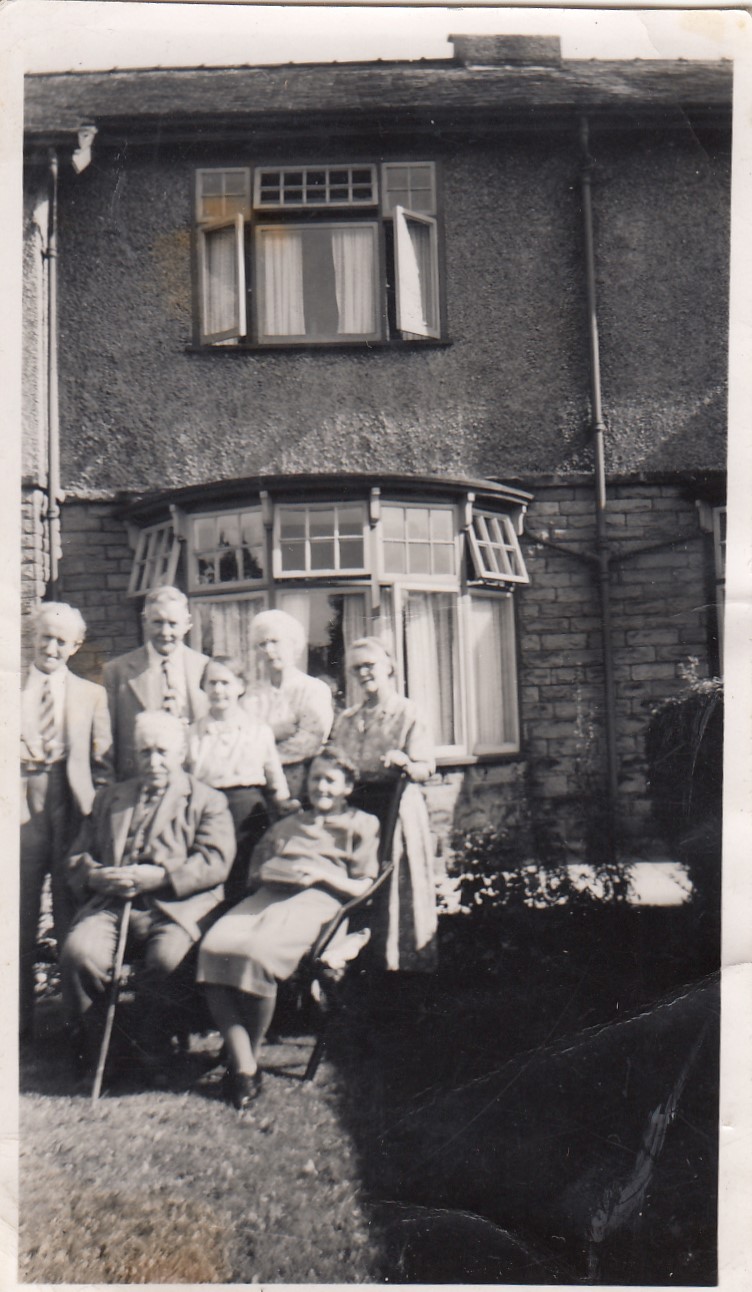
the Wellock siblings back row, left to right, Benjamin, Major, “self” (not identified, but possibly Sarah, Benjamin’s wife), Violet (Major’s wife), Jeanette (unsure how relates). Front row Walker, Mary. Gargrave 1949 during Major & Violet’s last trip to Yorkshire. Own collection

I love this worn little book for it contains so much of my Great Grandmother making her so much more real to us. With much gratitude to Mary Wellock for recording that which was important to her about her life, her family & her friends.

There’s snow and then there’s Yorkshire snow

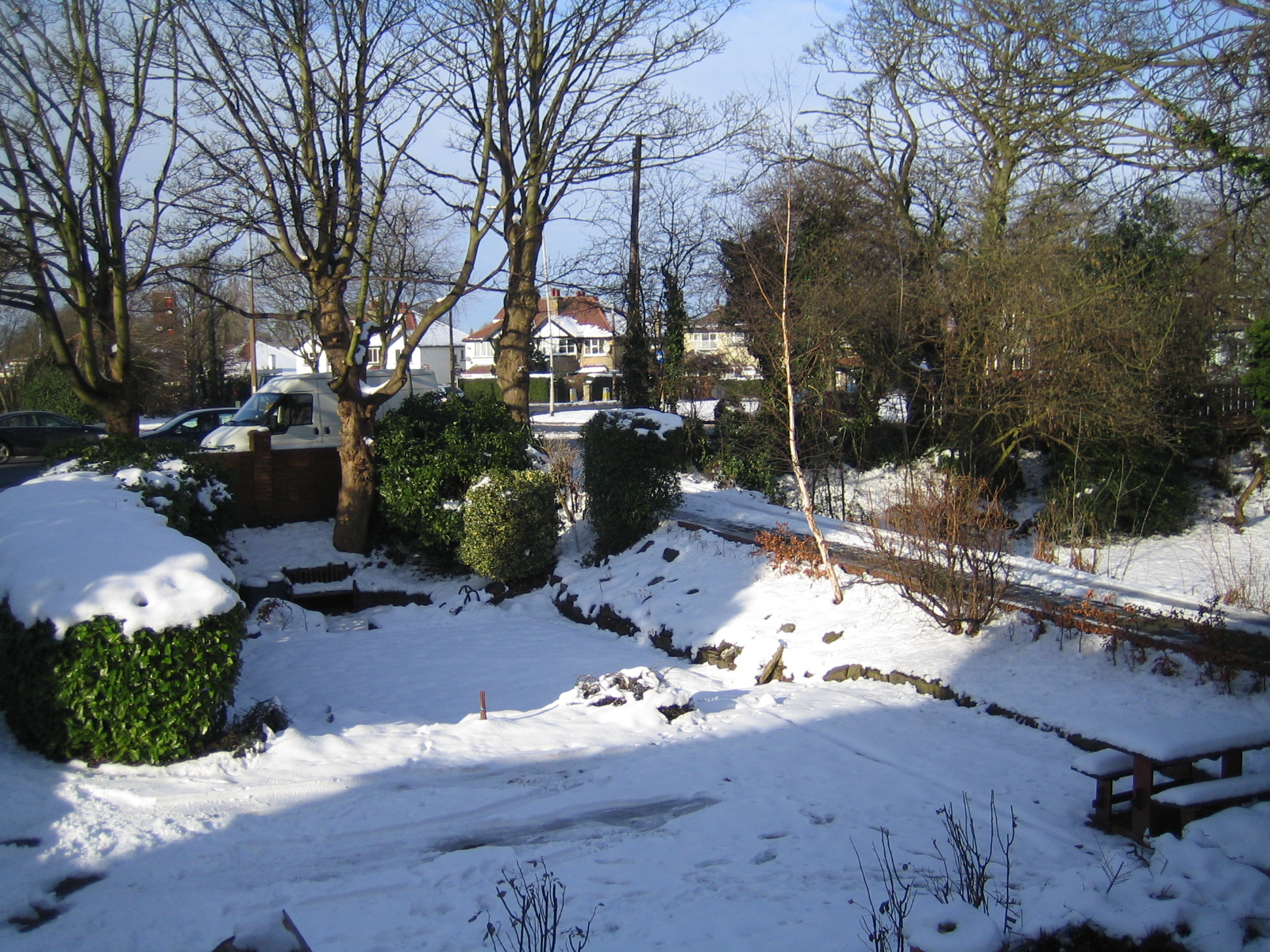
468a Harrogate Road, Leeds, 8 February 2009. Own collection. The snow was much reduced by the time I returned home

2 January 2009 (Monday)

It’s been really, really snowy today. Setting off from Leeds was fine, bus & train running to time. London was a different matter. I arrived at work about a quarter to eleven – I was the only senior finance team member in! Times like this don’t happen very often in our lives and its worth just sitting back & enjoying the snow (& the now).”

In 2009 I was commuting from Yorkshire to London each week and totally bemused that London seemed to have ground to a halt that week. In Yorkshire hill farming territory, stormy weather means snow. Here is the story of three memorable Yorkshire winters illustrated beautifully in three of my grandparents’ own words.

The extracts in this blog are taken from: letters sent between Mary Booth (Nana) & Walker Barrett (Grandpy) in 1947, Mary Houseman (Grandma)’s memoir “The Changing Years” and my transcript of an oral history interview with Walker Barrett, recorded c. 2011 as part of the Washburn Heritage Centre’s archive.

1933 – “up in’t telegraph wires”

 25 & 26 February 1933 saw one of the worst blizzards to ever hit the British Isles. It snowed continuously for 48 hours and there were fourteen foot drifts on Yorkshire’s moors and dales. In 1933, Walker Barrett was living in Greenhow Hill, a particularly exposed Yorkshire village.

A lot of snow, 1933, snow were up in’t telegraph wires…..All that snow come right over the house top. Our cattle…. there weren’t water bowls in them days, they went out to the water trough. There was a snow tunnel…..trough well designed, cos it was turned off in’t house ….went underground and came up underneath t’trough, you see. Well designed cos they didn’t freeze up.”

Mary Houseman tells a similar story.  

I’m sure that winters were more severe then. Many times the roads were blocked solid for thirty days and we could not get out anywhere. We had to dig a path to get across the yard and often all the windows, taps and water would be frozen up. I once remember having to carry it all in buckets from the tank in the stock garth twice a day to water all the cows. When we started making milk we took it in cans to Norwood Edge with the horse and a homemade sledge. Some of it just stood there for days, the milk wagon couldn’t even get there. We carried hay on our back to feed the sheep. I have never worn trousers and my skirt got wet through trailing on top of snow drifts

1947 – “It took us all day digging through high drifts just to get across the yard into the buildings

Mary Houseman was still living at Prospect Farm, Lindley

The winter of 1947 will be remembered a long time or should I say early Spring. At the end of February came the worst snow in living memory. Day after day it continued. Each morning when we wanted to get out of the back door we had to dig it. It took us all day digging through high drifts just to get across the yard into the buildings. We were able to milk but nothing to put it in so it was just put down the drain….It was almost impossible to get to the sheep. We hadn’t a tellyphone [sp] so we were cut off from everything and everybody for a long time but we had plenty to eat and coal to burn. When the storm did stop three of our men and some of Baxter’s used to go and dig the lane out by hand as no tractors then. The snow was frozen so hard that we walked on top of it right across to Stainburn one Sunday. We could not see any walls just the treetops stuck out. The sun shone through the day and it froze hard at night like the countries where they ski. When it did start to thaw it was waist deep in slush. When the roads did eventually get a way through they were still a foot deep in ice and bad to travel on. The poor sheep were in a sorry state. Some lost their sight it was called snow blindness. We did eventually get them near home by walking in a line on the hard path where Dad went everyday to take hay. Some could not stand so they had to be carried in a sack. We gave them milk to drink to give them a bit of nourishment and slowly they got a bit stronger. I don’t remember loosing any but a lot of sheep on the moors were snown under the drifts and never found until the snow had gone. Food for cattle and people was dropped from the air for some farmers in isolated areas…..The road over the moor was impassable for weeks. Gangs of men with shovels and spades came to cut through the drifts. I hope we never have a snow like that again”.

Walker Barrett, now at Stainburn, continues.

We lost a lot of sheep, we did that year. But 47 snow. There were just eight weeks tilt milk wagon coming into the yard. It came in on’t Sunday when it started snowing that Sunday morning and it was just eight weeks on’t Monday before the milk wagon came into the yard

We used to sledge it down’t fields with horse & sledge and come out down at bottom of Leathley bank

He [Henry Barrett, Walker’s brother] was at Lindley….Although when we were blocked in at Stainburn he could go out every day. Cos he used to bring van and pick our milk up off road and take it down to his place to pick up

What Walker didn’t talk about in his interview is the impact it had on his & Mary Booth’s courtship. Their letters give a sense of how long the snow kept the two young lovers apart.

Extract of a letter from Mary Booth to Walker Barrett postmarked 5 February 1947. Own collection.

From Mary to Walker, postmarked 5 February 1947 “You did right not to come last night dear as the roads are bad around here…..I was watching the weather most of the afternoon then I finally decided that it was not fit for you to come about teatime….do come up any night dear when it is fit but please don’t risk it when the roads are bad.

From Walker to Mary, written 5 February 1947 “Well dear I am trying to write you a few lines but when’t will be posted I don’t know, we have had no post since Monday & the post doesn’t look like reaching here this week. Did you expect me on Sunday, I was sore disappointed, but it really was not safe to come, I could have got to Askwith but not back to Stainburn then I would have had to sleep with you dear. The roads around here are bad don’t think the Wolseley will be out this week. We shall have to cut the lane right from the yard bottom nearly to Ridleys & then it is blocked from the lane ends nearly to Housemans but there are 12 Germans started at the bottom end”.

From Mary to Walker, postmarked 9 February 1947 “The post man had to walk part of the way from Otley as it had drifted it again. When I saw him coming here I didn’t dare hope for one from you. As I’d been longing to hear from you all the week….. You sound to be well blocked in down at Stainburn. We’d heard from one or two folk how bad it was. It’s not much good digging as the wind fills it up again with more snow. We managed to get down to Otley on Friday but from Askwith to Otley there’s only way for single traffic so we just trust to luck that we don’t meet anything coming the other way….. But please dear don’t start to bike up as it’s too far in this weather and the roads are very rough.”

From Walker to Mary, likely February 1947, “We are pretty well cut off only open to the Bank top yet & it’s blowing it in again & snowing like blazes. I’m well & truly fed up, but I’ll pop in one of these nights. I intended coming tonight. I think we have got above our fair share of this snow up here many places the drifts are 6 & 14 ft. the Bank was full. I go through the back of Clifford & down the Bank with the milk…… our car will be lucky if it’s out for next weekend. I have never seen it since last Saturday night. I’ll have to dig it out & warm it up tomorrow & see what a car looks like”.

From Walker to Mary, 16 March 1947 “I am not so bad but fed up with the weather. Tt looks as if it will be Tuesday or possibly Wed before we manage to get the car out. Only Bernard cutting from here…..”

1979 – “special day”

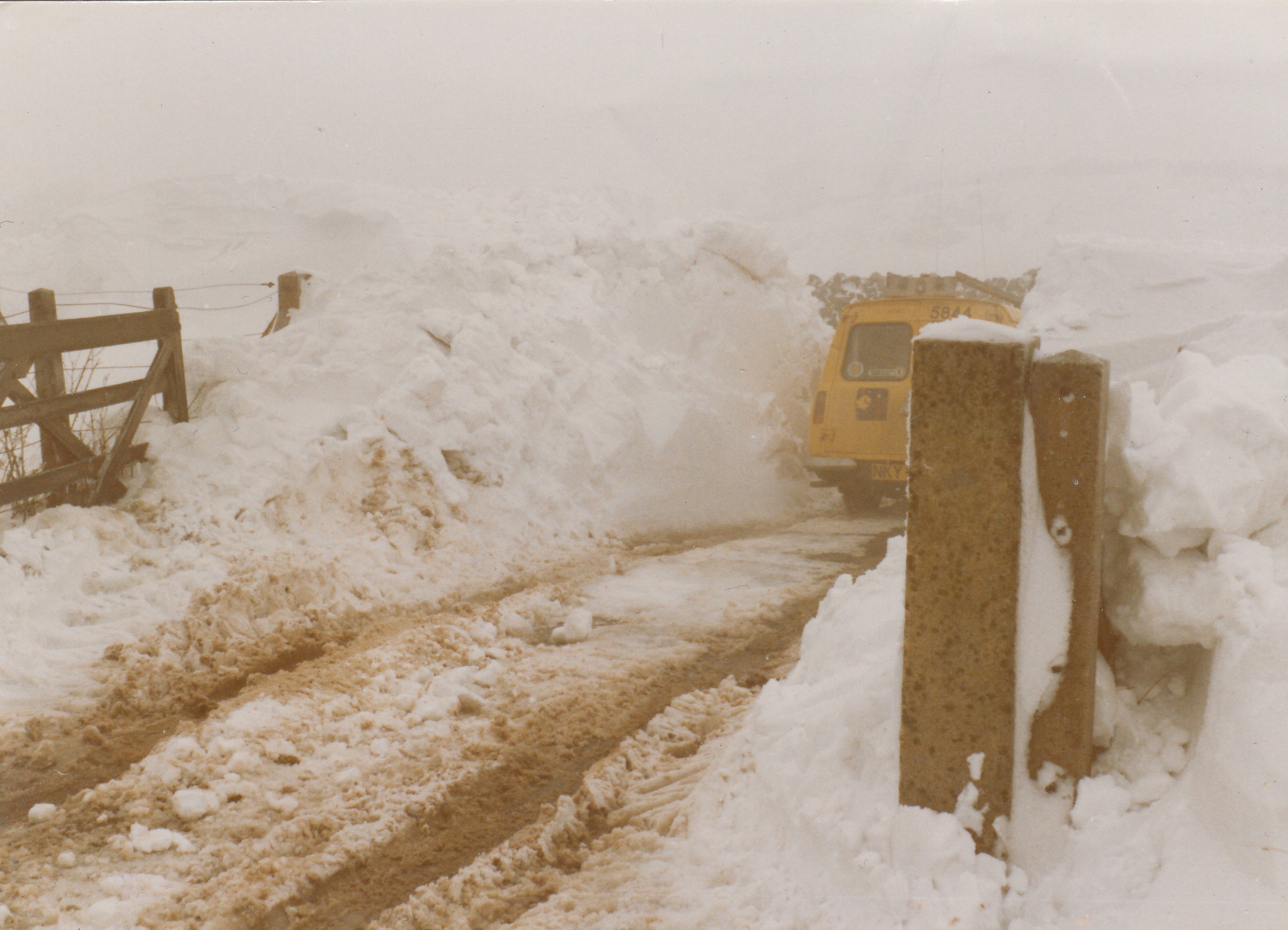
Snow at Lindley in 1979. Own collection.

For Mary Houseman the winter of 1979 was far more memorable for the birth of a granddaughter than for the strikes which were causing such difficulties for the rest of the country.

1979 started with snow and ice through most of January and February we put electric fires in the parlour to keep it from freezing up and some days the milkman could not get up for the milk and January 23rd was another special day in our family. Ann got another baby girl, after a few anxious days wondering if we would all be snown in. It was a third daughter, but they chose Anna Marie for her name, a bit more up to date than just Mary. They were both well and soon back home to the ice and snow.

ADD: I recently came across this wonderful short video on BBC Rewind, Snowcats Rescue Sheep – perfectly illustrating the snows of Yorkshire in 1979.

So next time there’s a sudden snowstorm that causes mild inconvenience, sit back & enjoy the snow (& the now).

With love and thanks to my maternal grandparents Mary Booth & Walker Barrett for saving their letters of thwarted visits and to Walker Barrett & Mary Houseman for sharing their memoires in oral & written form.

What a birthday date book taught me about WW1

Mary (Pollie) Wellock. Own collection.

I grew up thinking our family had escaped largely unscathed through both WW1 and WW2. Farming was a reserved occupation and none of our ancestors had fought in either of these two horrific wars. Slowly but surely my thinking has changed. First there was my great, great Uncle, William Henry Barrett who fought in WW1 and died of tuberculosis six years after the war ended, possibly a disease caught whilst serving. Then there were two cousins, Harry Clough & Frank White, relatives of my great grandmother, Hilda Mary Scott, both killed in battle. These are the ones I have so far written a story about, but there are others too, cousins & half cousins that I have come across in my research.

Still, it felt like these were isolated incidents. We are farmers & miners. We weren’t required to fight. That was until I started to transcribe my great grandmother (Mary Wellock)’s birthday date book a couple of weeks ago. Mary or Pollie as she liked to be known was my Grandpy’s mother, born in 1886. One of eleven children in a close family I was quickly able to identify the majority of the entries. Pollie had had eight brothers but by 1914, three were likely too old to serve, two had emigrated to Canada and two had died as children, so it was probably easy enough to protect Benjamin who, as he had no children, might just have come under pressure to volunteer, or even been conscripted had he not been a farmer.

I moved on to identifying Pollie’s friends and it was then I realised that one memorial in the remote Yorkshire village of Greenhow Hill, which Pollie called home, was the unlock for many of the people she had recorded as friends. Take a moment to study the names in this photo. (I make no apologies for this being the second time I have shared it on this blog).

Memorial plaque, Greenhow Hill https://greenhow-hill.org.uk/people/1914-1918/

Busfield, Newbould, Swales, Barrett, King & Moor all appear in Mary’s date book. The Whitehead family connects very closely to the Busfields. Mary was close enough to the Swales family to list the birthdays of three siblings Edith Ellen, Ethel & James. James fought and came back, their two brothers Herbert & Leonard were not so lucky, both dying in 1916. Over half the names listed on Greenhow Hill’s memorial can be easily and closely connected to Pollie’s friends identified through this one date book.

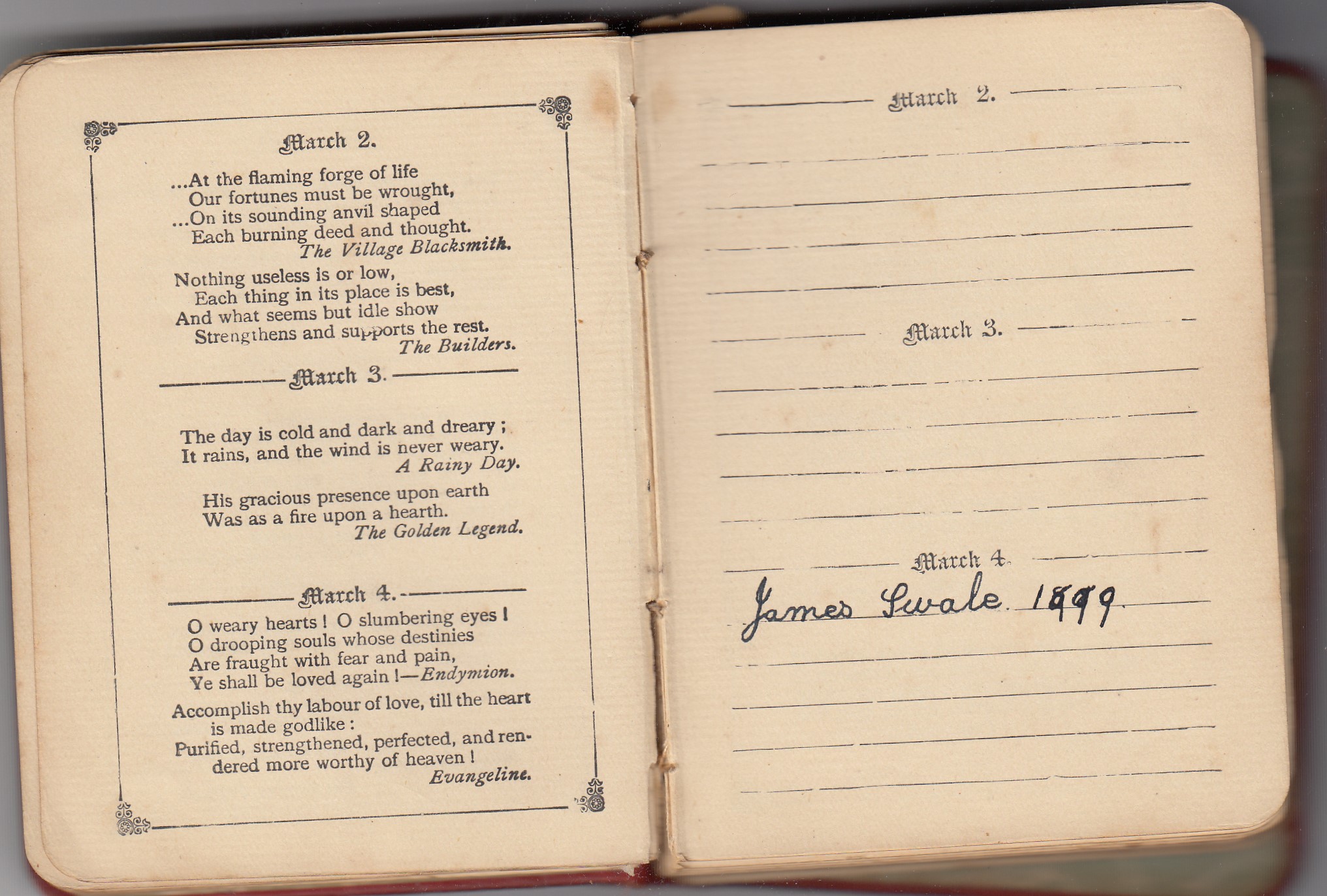
James Swales’ birthday as recorded in Pollie Wellock’s birthday date book. His sisters Edith Ellen & Ethel also appear. James fought in WW1 together with his brothers Herbert & Leonard who both died in 1916. Own photo.

Was there a sweetheart amongst the fallen? I tend to think not as Pollie was already 28 and unmarried when war started. If it was a local boy she loved she would have been wed by then. Instead, I’d like to speculate that William Henry’s connection to Greenhow Hill was how she came to meet his brother, George Thomas and that their shared experience of friends & brothers at war led them to connect.

This was a remote farming village where many households worked in protected occupations. No matter how insulated we thought our ancestors were from the war they were not.

With much gratitude to Mary (Pollie) Wellock, who had such a fascinating birthday date book, to her daughter-in-law, Mary Booth, my Nana, who kept it safe for me and above all to those who fought and those who remembered them.

There’s a later blog exploring the rest of the birthday book here

Are we a political family?

Growing up I didn’t consider us to be a political family. We didn’t join a party, deliver leaflets, or spend time debating the political issues of the day. We voted of course although those votes counted for very little in a first past the post system. Skipton & Ripon (where I first voted) is one of the safest Conservative seats in the country. Leeds North East (where I moved in 1997) has returned a strong labour majority for the last twenty-five years. Holborn & St Pancras (my current constituency) is another staunch labour stronghold. The MP in each case is chosen not by the electorate but by party members long before the election.

Our thinking has changed as we have grown older. Whilst Mum may still refuse to tell us how she actually voted, family lunches regularly stray into political debate and even Mum became an active campaigner during the EU referendum. It was at that point I decided to gift my youngest sister, Sharon, a rather unusual birthday present which I’ll come to later.

This week’s #52ancestor hint “voting” is the prompt I needed to bring together a few short stories of how our ancestors have long engaged in politics, demonstrating that we are much more of a political family that it might have once appeared.  

How the men in our family voted in the 1868 general election

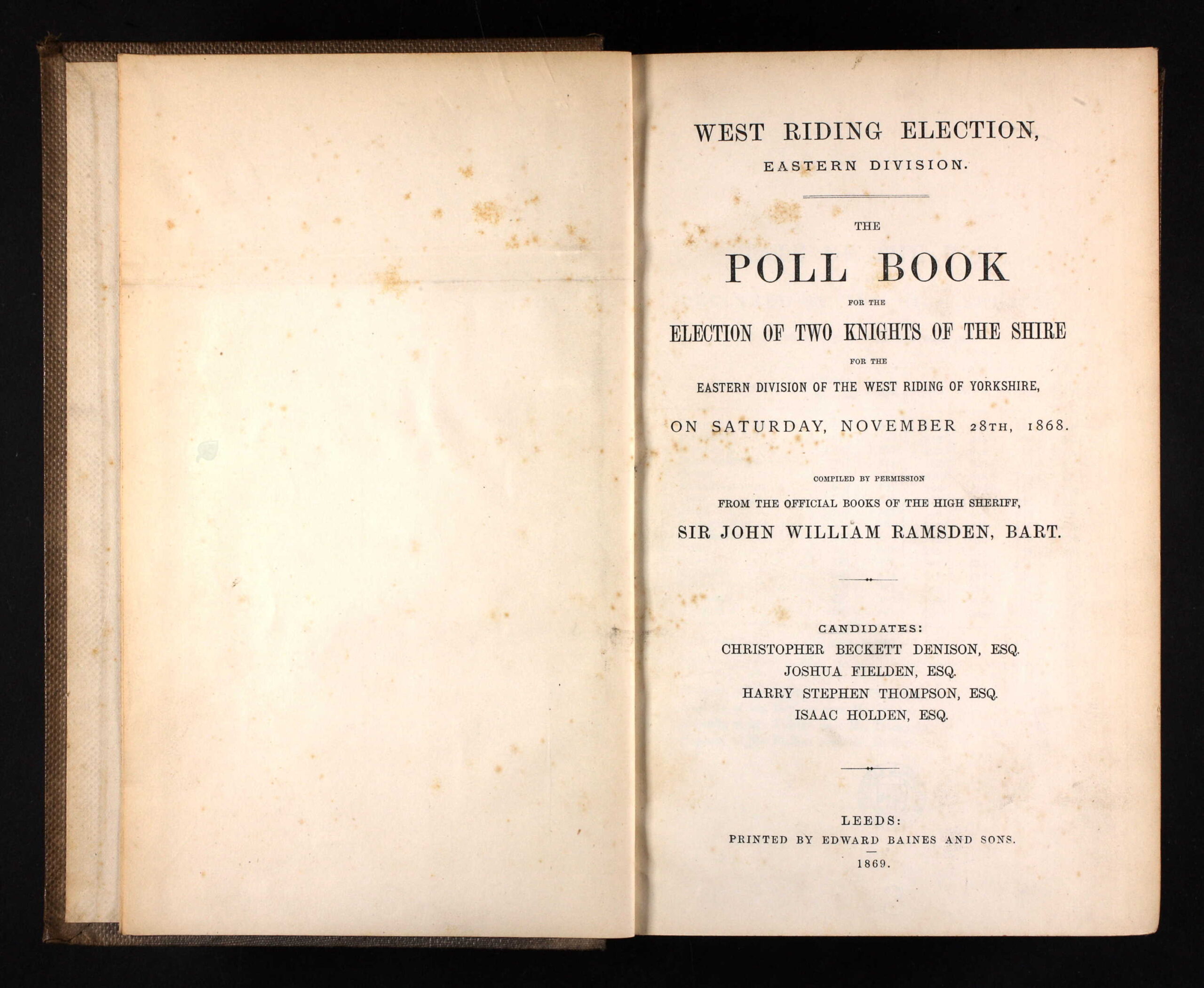
Poll book for the election of two Knights of the Shire for the Eastern Division of the West Riding of Yorkshire on Saturday November 28th 1868.

The snappily named “Poll book for the election of two Knights of the Shire for the Eastern Division of the West Riding of Yorkshire on Saturday November 28th 1868” records the actual votes cast in the 1868 general election. It also provides clues as to the voters’ relative wealth. The Reform Act 1867 had significantly increased the number of enfranchised men. In the Shires this right had been extended to all male heads of household occupying property with a rateable value of at least £12. The poll book also splits the electorate into those who either owned property or paid more than £50 a year in rent and those who did not.

It was a narrow Conservative victory over the Liberals.

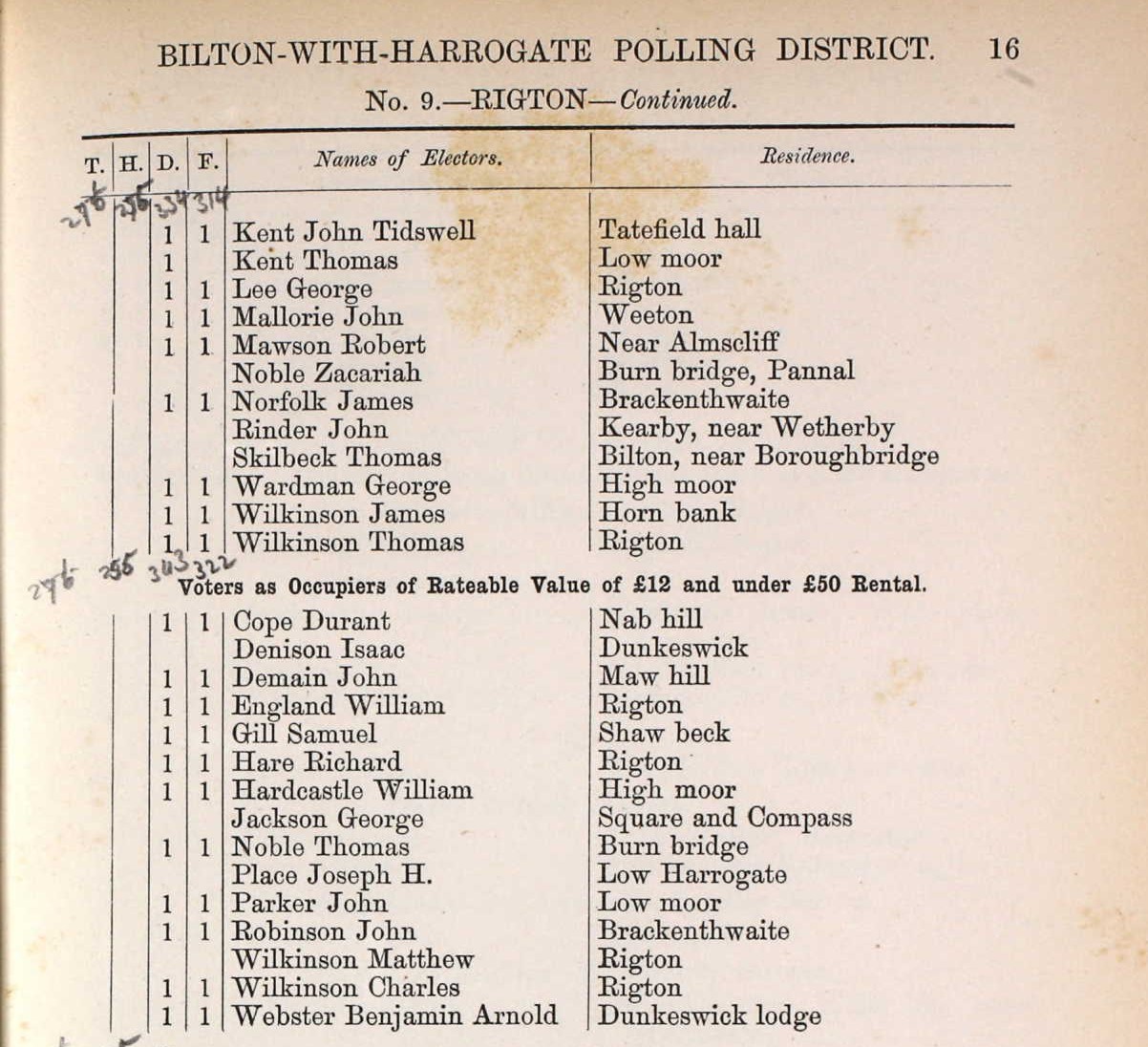
What of our ancestors? William Clapham, Thomas Wellock and Joseph Furniss occupied property with a rent of £50 or more and voted for the conservative candidates. Joseph Demaine, Richard Gill and Thomas Bradbury occupied smaller properties and voted for the liberal candidates. It’s a small sample so I’ll ignore the temptation to draw conclusions about the link between wealth & party. More critically John Howson, John Handley, George Brooks & Thomas Houseman were clearly missing from the voters list. All four headed up their households in 1868 and were likely disenfranchised due to poverty. Then there’s poor Matthew Wilkinson, who’s voting card was blank as he died less than a fortnight before the election. Not that his vote would have made a difference. To a man, Rigton voted for the conservative candidates.

Extract from the above Poll Book showing a blank entry for Matthew Wilkinson

Michael Houseman and the Harrogate Liberal party

Michael is my great, great grandfather (Grandma’s Grandfather). Born in 1842, Michael would have been old enough to vote in 1868 and there is a possible conservative candidate voting match in the poll book. Unfortunately, there was more than one Michael Houseman living in Darley at the time making it impossible to know if he is ours. Indeed, later evidence would point to the opposite, for Michael was an active member of the Harrogate Liberal Party in the late 1880s, the first member of our family for whom I can evidence a political party connection.

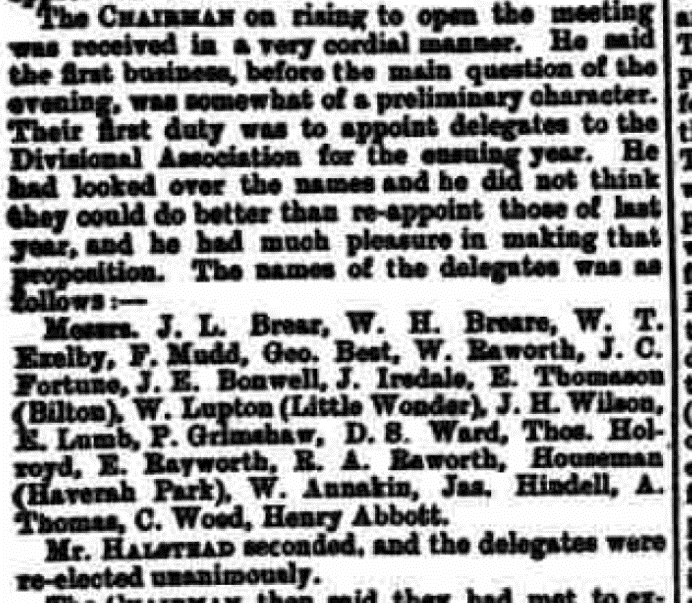
Report of a Harrogate Liberal Party meeting, Knaresborough Post, 23 April 1887. From the British Newspaper archive.

Michael was an elected official within the Liberal Party, the Divisional Association Delegate (Haverah Park). Which might sound impressive until you consult the census and see that there were just 71 people living in Haverah Park in 1891! There’s also little evidence of Michael contributing to the party meetings which were faithfully covered in detail by the Knaresborough Post. Perhaps Michael felt he should defer to those with more education or wealth or perhaps he felt he had nothing relevant to say about Irish Home Rule which dominated the discussions through this period. (It makes me sad to write this at a time when a hard border on the island of Ireland is back causing conflict). Still, it’s wonderful to find an ancestor who was actively involved in party politics more than 130 years ago.

Marie Greevz, our first political activist

A year or so ago, my sister Sharon suggested I needed to find a suffragette in the family. Ha, I said, we are not a political family. Then I stumbled on Marie Greevz, born Martha Clapham.

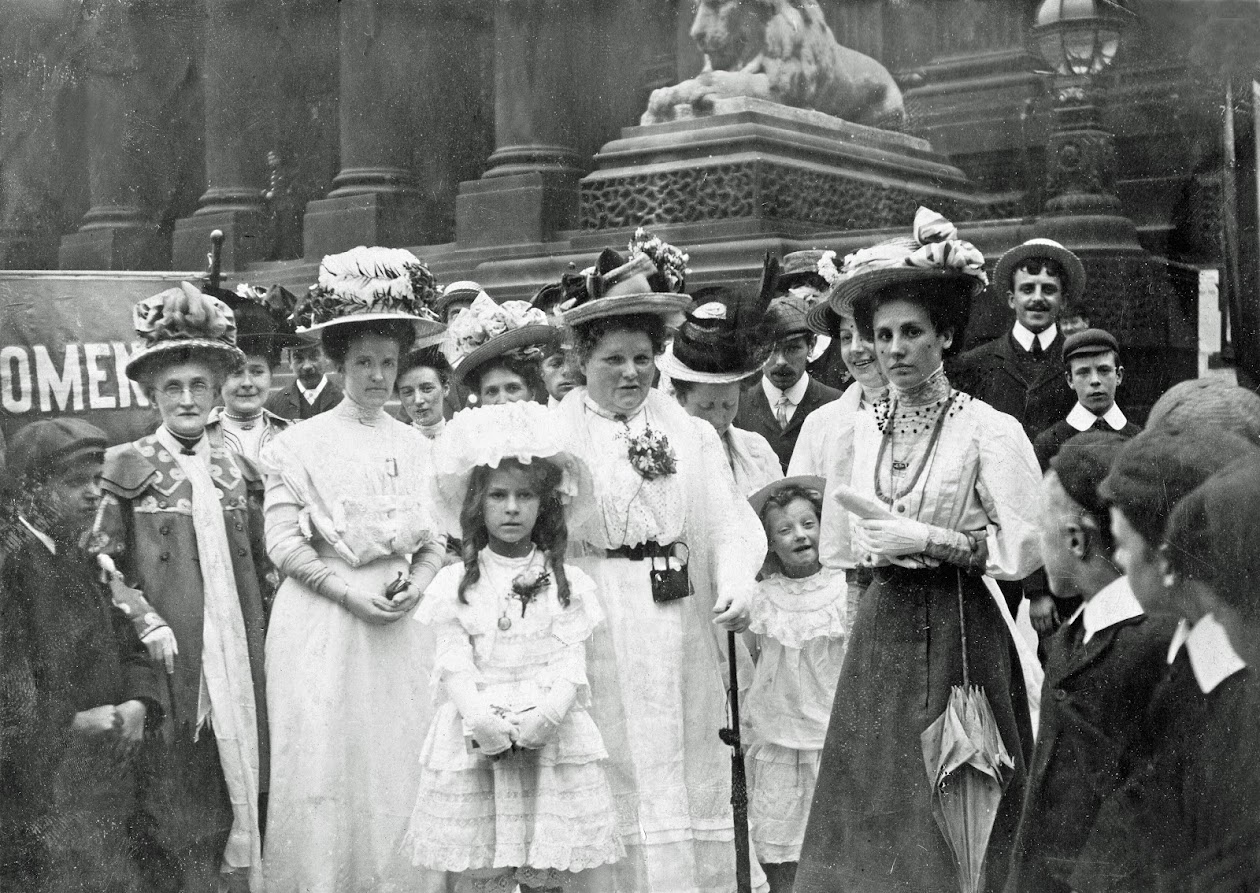
Martha Clapham aka Marie Greevz (front centre) outside Leeds town hall. From William Hudson’s collection

Martha was the daughter of the previously mentioned William Clapham (my great, great, great grandfather) and their politics couldn’t have been more different for Martha was a militant feminist and active suffragette. Unlike her generational peer, Michael, Martha spoke out in meetings, wrote letters to newspapers, marched on demonstrations and was elected as the first female president of the Leeds Philatelic Society. She was a political activist and a woman I am looking forward to learning much more about.

Sharon Slinger and an unusual birthday present

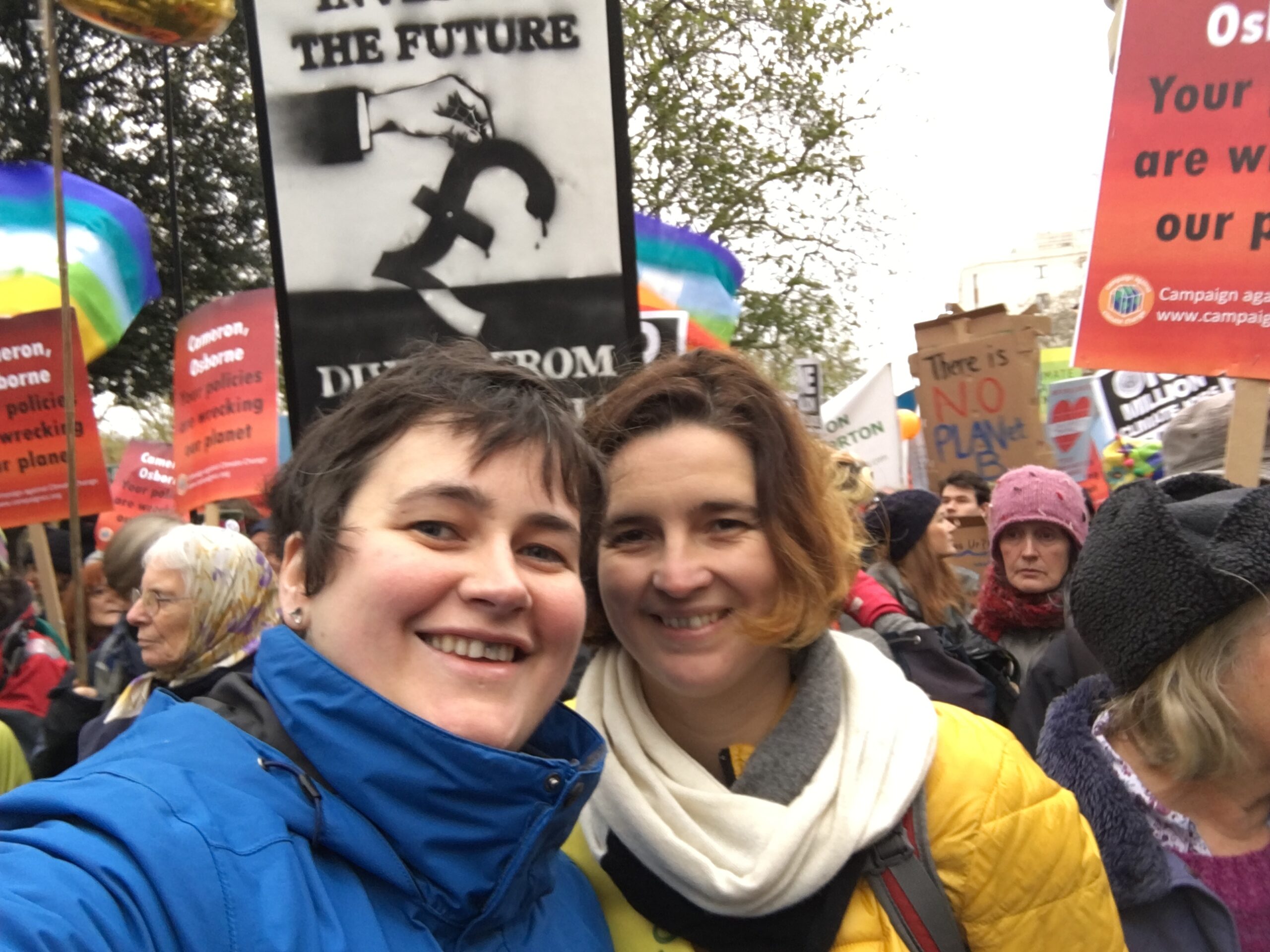
Sharon & Natasha on a climate march in 2015. Own photo.

My sister Sharon and I are both political campaigners in our different ways. After many years of debate, we have learnt to wholeheartedly support each other on most issues and to respect the right to have conflicting opinions where we don’t agree. We both care deeply about people, personal integrity, community, (in)equality and climate change. We both put the work in behind the scenes to make things happen and have both learned to be pragmatic where needed. If we’d grown up in a different family we may have both engaged in party politics from an early age. But we didn’t, so we didn’t.

We’ve often voted differently, and it took the EU referendum for me to absorb how close our politics really were. Which led to the unusual birthday present. I joined Sharon up to the Lib Dems. Most inspired birthday present ever. She dived right in. For we are a political family. Earlier this year Sharon became (as far as I know) the first in our family to stand for election as a city councillor (for Weetwood in Leeds). I had to watch wistfully from London, pride in my heart, as my entire family took to the streets in support of Sharon. Labour felt nervous enough to bring in the big guns. 2,207 votes was a pretty credible result, but sadly not enough to take the seat. This time.

In short, we are a political family

250 years ago, an act of parliament allowed the majority of our ancestor households to have at least one vote. 130 years ago an ancestor first joined a political party. 100 years ago a female relation demonstrated how women could be incredibly effective political campaigners. This year my sister has proved herself as a credible candidate in a hard-fought city council election. Our next generation may or may not decide to engage directly but they will at least know that they are from a political family and they have every right to step forward should they so wish to do so.

With much gratitude to all those of my ancestors who voted and especially to Michael Houseman, Martha Clapham & Sharon Slinger who taught me that we are a political family. Also to Amy Johnson Crow for the 52 ancestors hint.

Wid Swinden, remembered

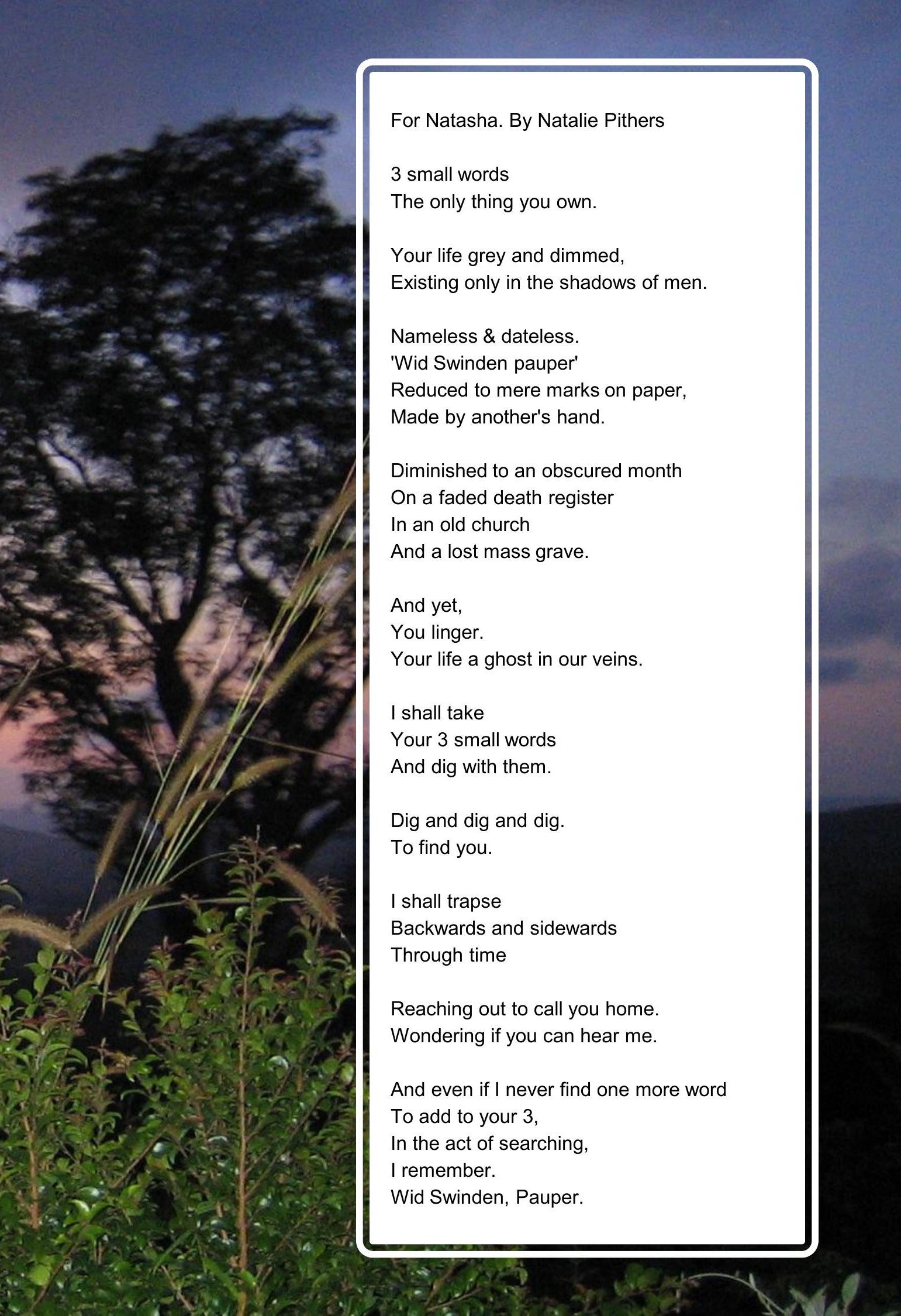
A poem by Natalie Pithers inspired by Wid Swinden’s story

Earlier in the year, I wrote a blog celebrating the lives of three pauper women ancestors including a woman known only as Wid Swinden.

“The evidence of my 7th great grandmother’s existence is slim and mostly circumstantial. Yet exist she must, less I wouldn’t”.

Wid Swinden’s tale remained with me and when I had the opportunity to be interviewed by Tina Konstant on the Waffle Free Stories podcast, her brief story was one I chose to share.

This morning I woke to the most beautiful surprise. Inspired by Wid Swinden’s story in the podcast, Natalie Pithers, a professional family history storyteller, had written me a poem.

From a paragraph in a blog, to a story in a podcast and now immortalised in poem. Wid Swinden is remembered.

Thanks to Natalie & Tina for helping that to be so.