My sister is also my aunt

Atticus: Double first cousin. Scout: How can that be? Atticus: Two sisters married two brothers.” (From To Kill a Mockingbird).

Eric Houseman (the young boy in the photo) is both my Grandma’s cousin (Laura, his mother, being Grandma’s mother’s sister) and my Grandma’s first cousin once removed (John Taylor, his father, being Grandma’s father’s nephew). Own collection.

It’s the stuff of fairy (or scary) tales – pairs of siblings marrying either together in a double wedding or perhaps with the second relationship arising as a result of the first union.  

Whilst we have at least one example of this classic tale in our tree – the marriage of Elizabeth Furniss & George Downs (3 x great grandparents) in 1866 followed on from that of their siblings Mary Downs & John Furniss in 1859 – I’ve just this week come across a third example of a different double relationship – two sisters marrying an uncle & a nephew.

It’s not as strange as it seems. Mothers frequently bore children for up to twenty years meaning uncle and nephew could be much closer in age than the uncle was to his own sibling. In larger families, children would often go to work as farm servants on their relatives’ farms. And in remote villages there wasn’t always a great deal of choice of partner….. Add to the mix a deceased or otherwise missing father and which requires elder siblings to look after their younger ones and I am only surprised I haven’t found more cases of these dual relationships where one man is both uncle and brother-in-law to another.

Here are the stories of those three double relationships.

Elizabeth Hornby & Robert Walker

I am currently researching our 3x great grandparents Elizabeth & Robert’s story. They are Grandpy‘s mother’s mother’s parents. In short, Robert’s father died when he was just twelve. By 1841 he was living at West Side House, Malham Moor with his maternal grandfather, uncles and his Uncle William Pratt’s new wife, Margery. In this instance, Robert was over twenty years younger than his Uncle, but then so was William’s new wife – generationally Margery & Robert were very similar.

Malham Moor is a bleak remote place but fortunately Margery had only moved a mile up the road from her family home and she likely saw a lot of her younger sister Elizabeth which means Robert probably saw a lot of her too. They married in 1844.

The Bentley girls and the Greenwood boys

A slightly more complex set of relationships underpins not just two, but three linked marriages between the Bentleys & the Greenwoods.

The Bentley side is straightforward: Abigail (b. 1882), Ada (b. 1883) and Florence (b. 1886) Bentley were all sisters of my great great grandmother (Nana‘s mother’s mother), Annie. Abigail was the first of the three sisters to marry a Greenwood (Richard, b. 1879) in 1908. Florence was next in 1909 marrying Richard’s brother, John (b. 1881) at which point Florence and Abigail became both sisters and sisters-in-law.

It was the third Bentley – Greenwood marriage in 1910, between Ada and Hanson (b. 1883), which left me stumped. The Bentley family and the two Greenwood brothers all lived in the same parish, Sitlington so their marriages made sense. Hanson, however, came from Wadsworth some thirty miles away and past the major urban centre of Halifax. There had to be some sort of family connection.
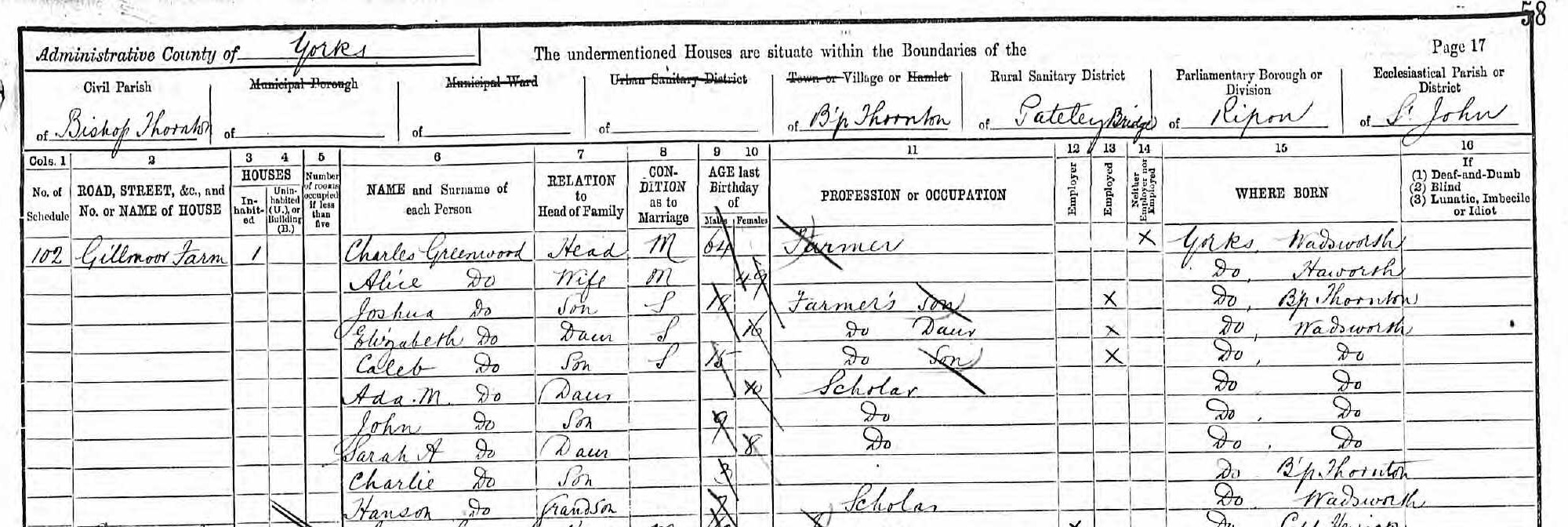
1891 census showing the Greenwood clan. Charles with his second wife Alice, mother to Richard & John (Richard is missing from this census) and his grandson Hanson. From ancestry.com.

The 1891 census furnished a vital clue as Hanson was living with his grandfather, Charles Greenwood and Charles’s son, John, who’s vital statistics matched those of Florence’s Greenwood husband. After a lengthy bit of research I discovered that Alice, mother of John & Richard, was Charles’s second wife. They had a much half sibling, Mary Ann (b. 1862) who had an illegitimate child named Hanson! Whilst I haven’t been able to discover much about Mary Ann, Hanson appears to have grown up with his uncles and this no doubt led to him meeting Ada. This makes Abigail & Florence both sister & aunt to Ada as well as sister & sister-in-law to each other!

Hilda Mary Scott & Jesse Houseman

Hilda & Jesse are my Grandma‘s parents and as such I know a lot more about them and their relationships including that Hilda’s sister Laura married Jesse’s nephew, Jack.

Hilda (b. 1891) had a particularly close relationship with her younger sister Laura (b. 1895) as these two photos clearly demonstrate.
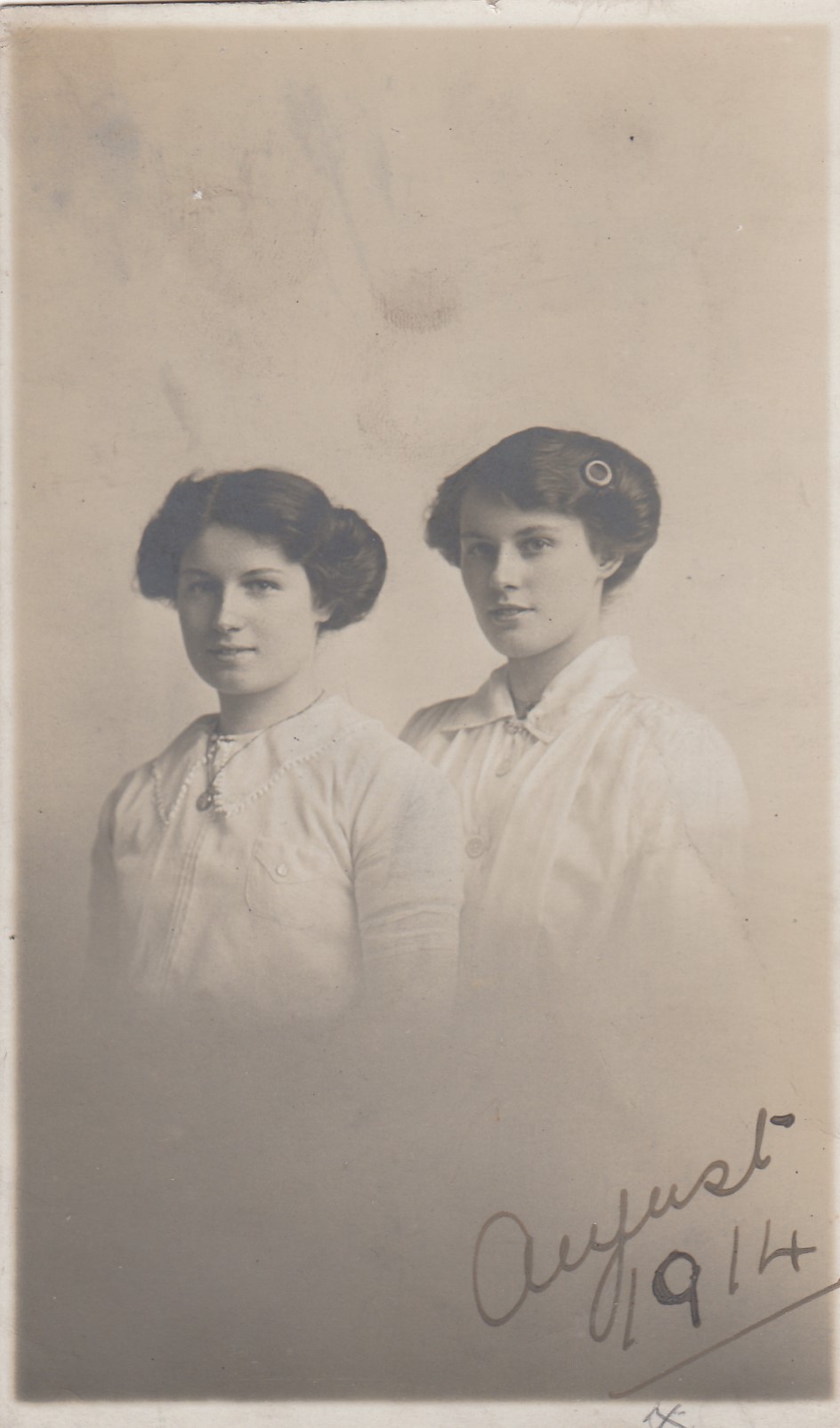
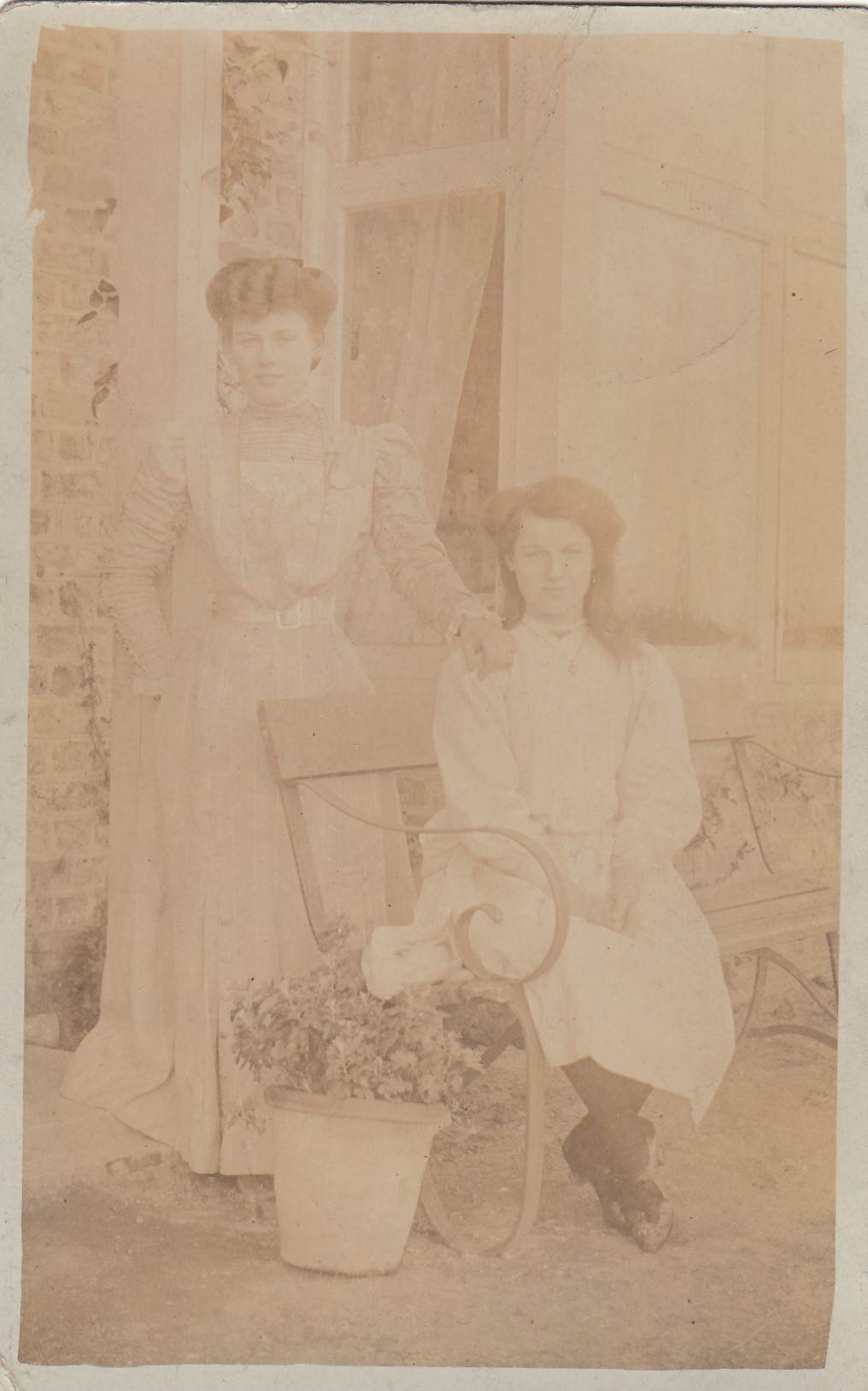
What intrigued me more was Jesse’s relationship with his nephew John Taylor “Jack” Houseman (b. 1894), son of Jesse’s oldest brother, Robert.  Three of Jesse & Robert’s middle siblings had died from scarlatina in 1882 and I believe this had almost created two generations within the one family: Robert (b. 1867), Thomas Bradbury (b. 1869), Betsy Jane (b. 1871) and John Charles (b. 1873) being the first and then Alice (b. 1882), Jesse (b. 1885), Beatrice Maud (b. 1888) and Emma (b. 1892) being the second. This would have been more pronounced after the death of Robert & Jesse’s father, Michael, in 1892 when Jesse was just seven. It would have been natural for Robert, as eldest brother and with three children of his own of similar age to the younger group, to have stepped in.

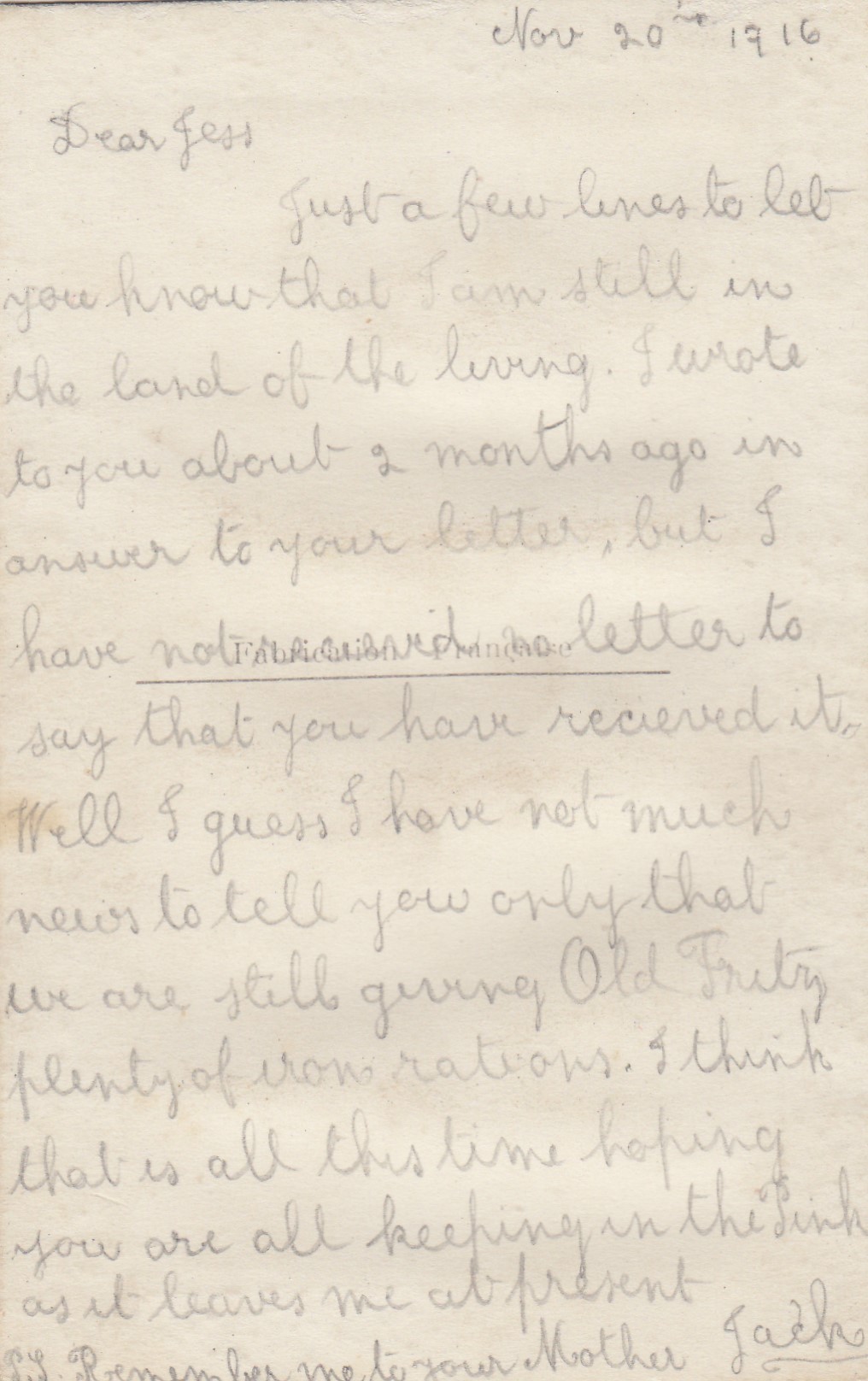
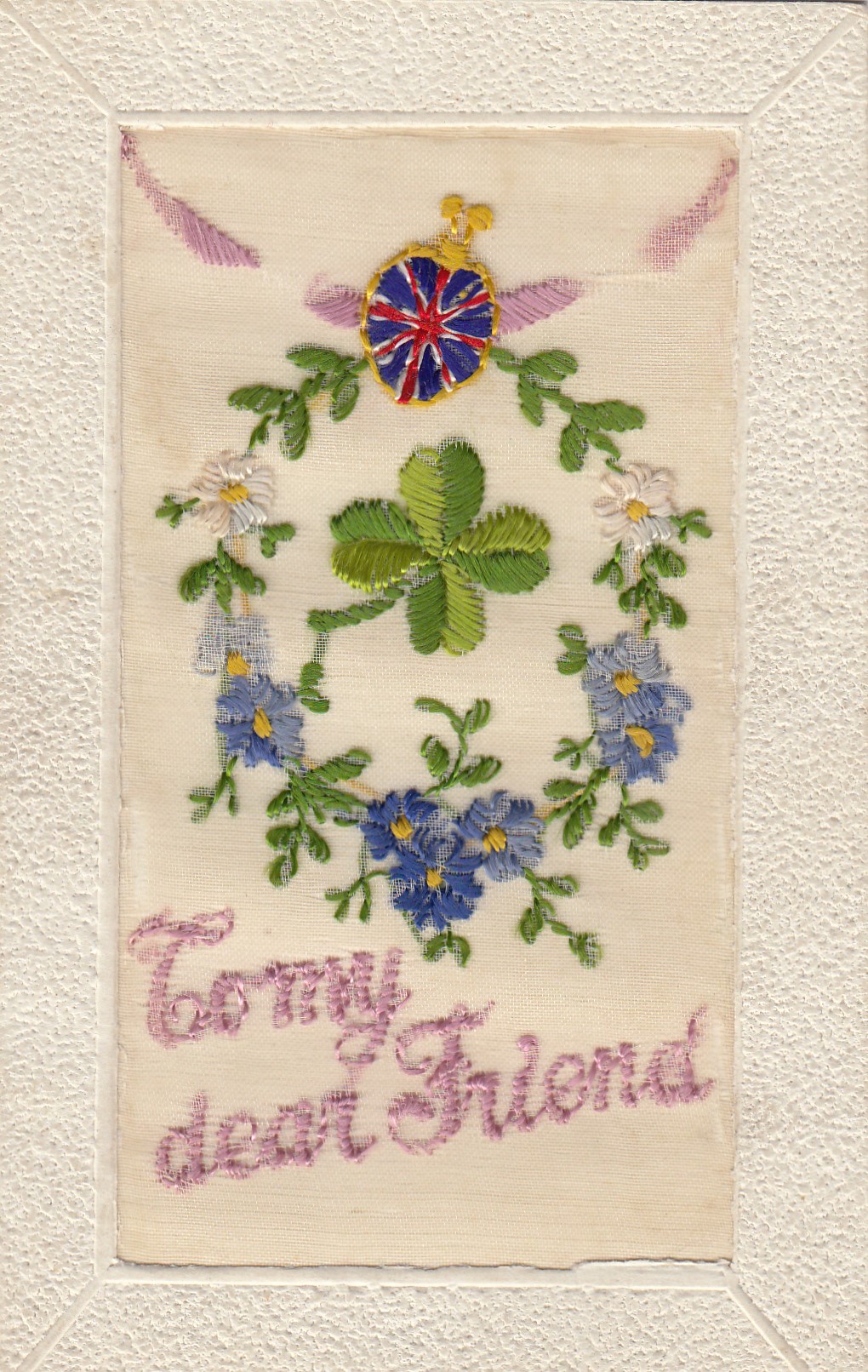
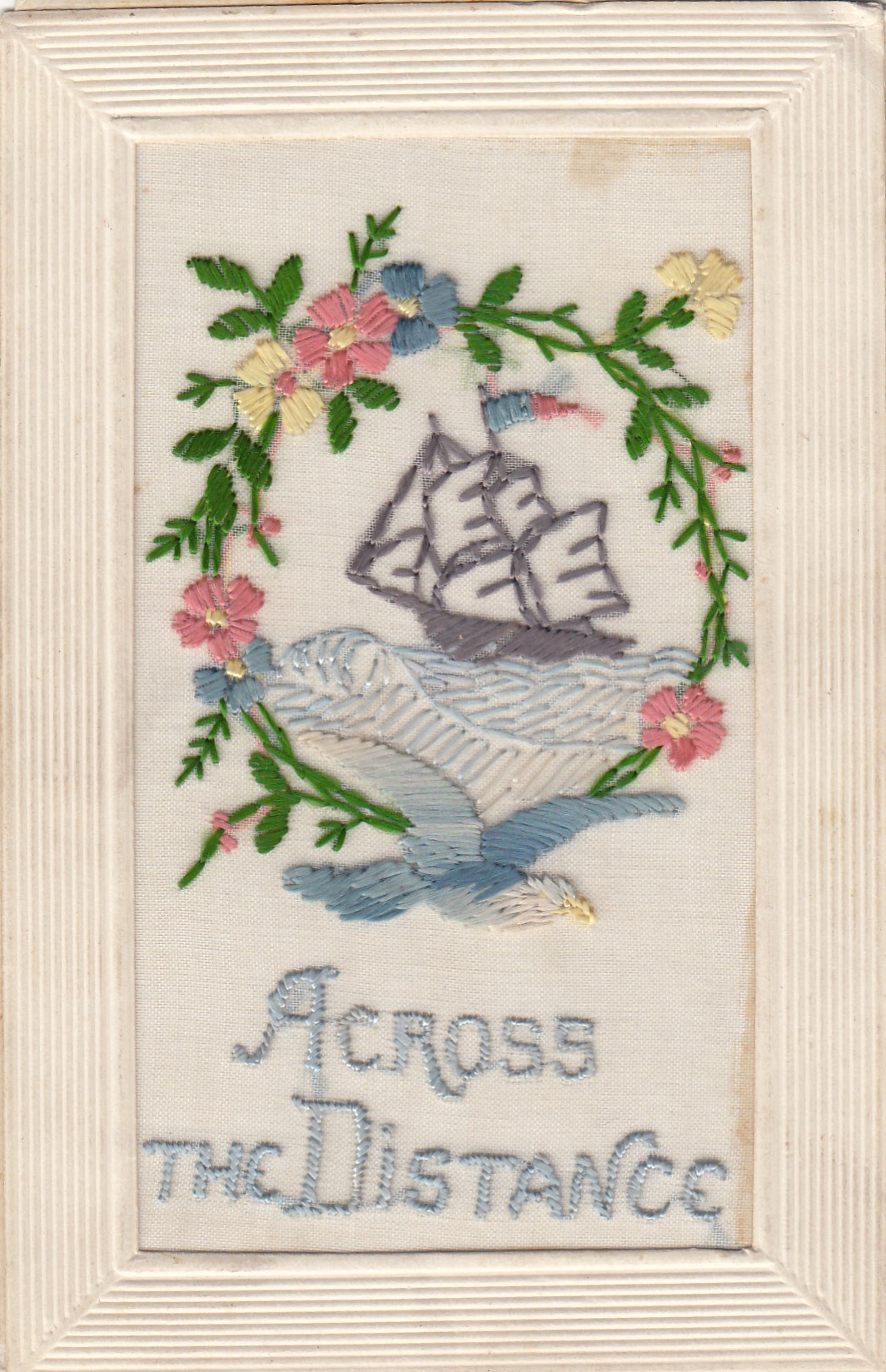
These WW1 postcards from “Jack” to his Uncle Jesse give a glimpse of the warm relationship between the two.
Hilda & Jesse were the first to marry on 28 September 1915. Five years later Laura married Jack. I wonder if Hilda & Jesse were responsible for setting the pair up?

This was not only the marriage of two sisters to an uncle & nephew but the marriage between two sets of close friends which is perhaps why the relationship between the two couples and then their children stayed strong. Aunty Laura became Grandma’s godmother for example. However, the final, sweetest tribute to this double relationship was to come at the end. Both Hilda & Laura died relatively young, Hilda aged 62 in 1954 and Laura aged 61 in 1956. On can only assume that Jesse & Jack took comfort from each other as they chose to bury their wives in next door plots. Both Jesse & Jack outlived their wives by almost 30 years with Jesse dying aged 91 in 1977 and Jack was the last to die aged 87 in 1982 bringing to an end this incredible dual relationship.
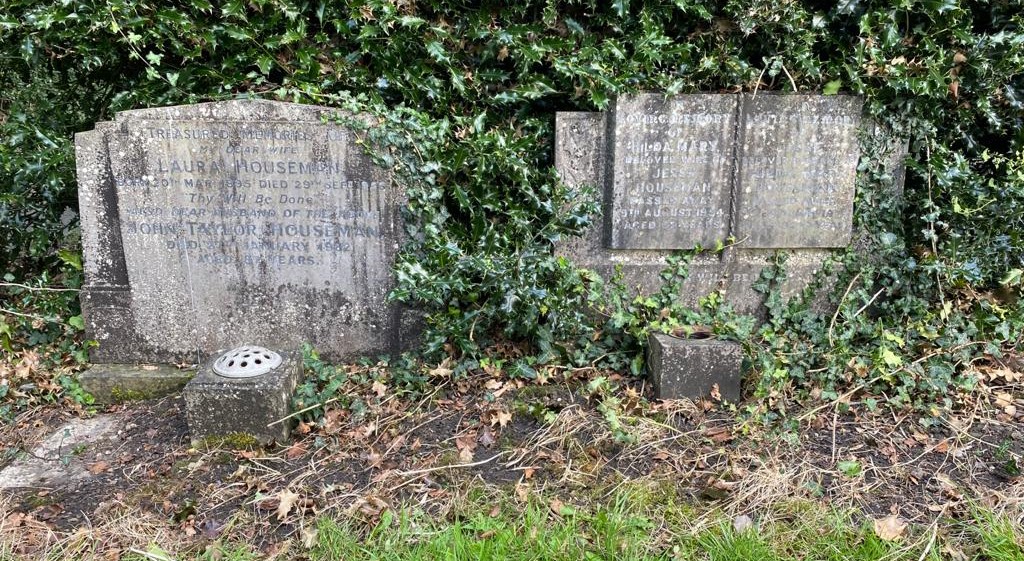
The twin gravestones of Hilda Scott & Jesse Houseman (right) and Laura Scott and John Taylor “Jack” Houseman (Left) at Otley Cemetery. Own photo

Preserving through use

My broken engagement glass preserved through new uses.

When I broke the fifth of my eight engagement wineglasses, I was cross for a moment. But it broke cleanly. The bowl might make a beautiful flower display. More, those glasses have been used, a lot. They’ve been part of my life for nearly twenty-five years. The crossness I felt dissipated in a minute. The joy I feel in their use is with me every day.

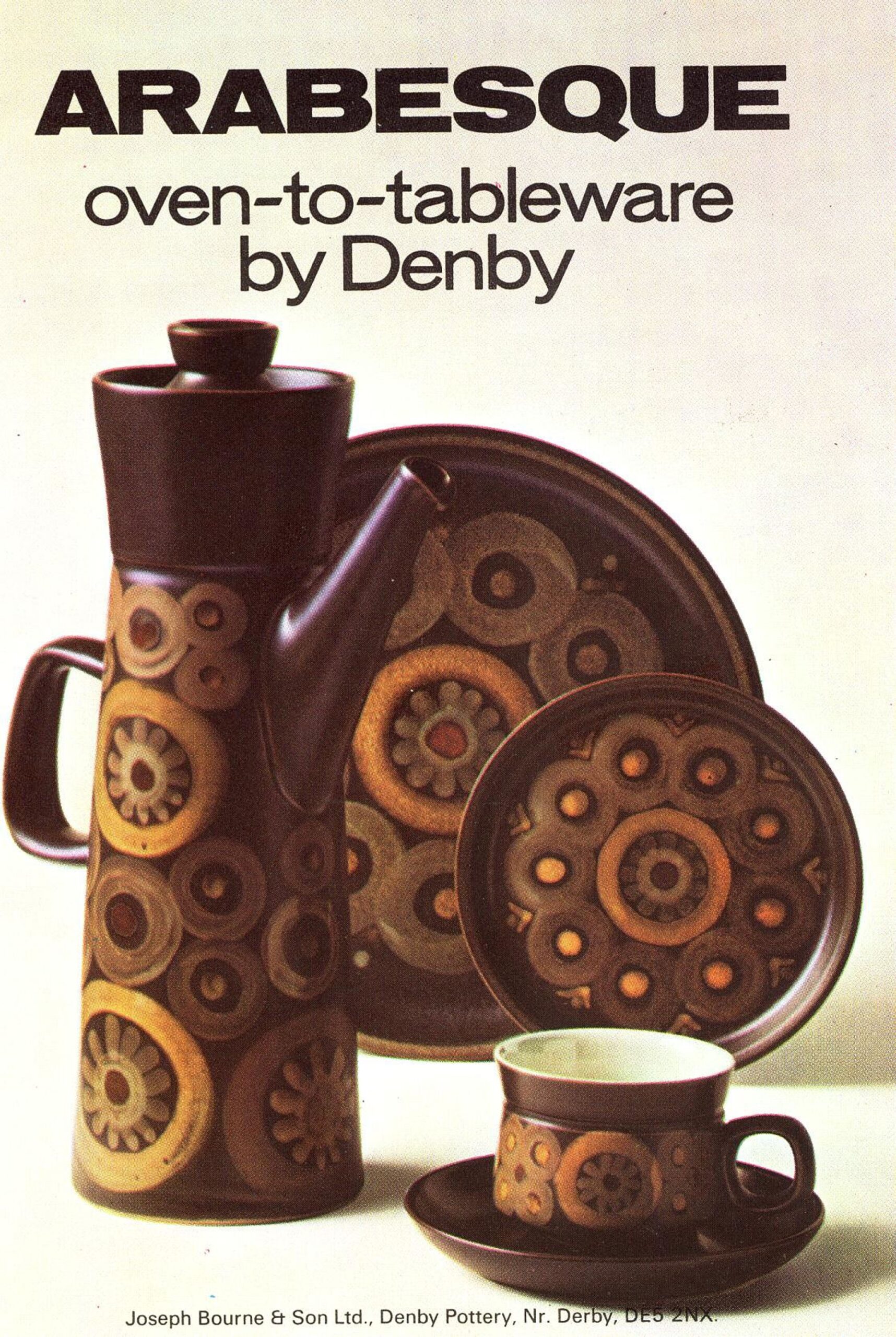
Nana had a wedding china and an everyday crockery. When her arthritis got too bad to handle the “everyday” the Denby Arabesque came to me. I, too, use it every day. Except when my sister-in-law is here because she doesn’t like the scrape of cutlery against the crockery. I don’t even remember what Nana’s wedding china looks like.

A flyer for Denby Arabesque (Nana’s everyday crockery) taken from Denby Pottery pinterest site.

As the family heritage keeper, I have spent a fortune on proper archive materials along side weeks of time scanning and labelling. I don’t regret a moment.  And yet I know that photos in a box may not survive much longer than I. Instead, I rely on stories & connections to preserve our family heritage.

I preserve through stories. One sister confessed that she was only really interested in those she knew but then loved learning about our great, great grandfather’s political leanings. Another sister said she’d felt better to know about a pioneering divorce in 1899 (longest story that I tell a lot and will get written….). In their own ways my sisters had told me that stories were the way forward to preserve what I knew. Then I learnt that a printed version of this blog was making its way around my Dad’s cousins and I discovered the truth in this.

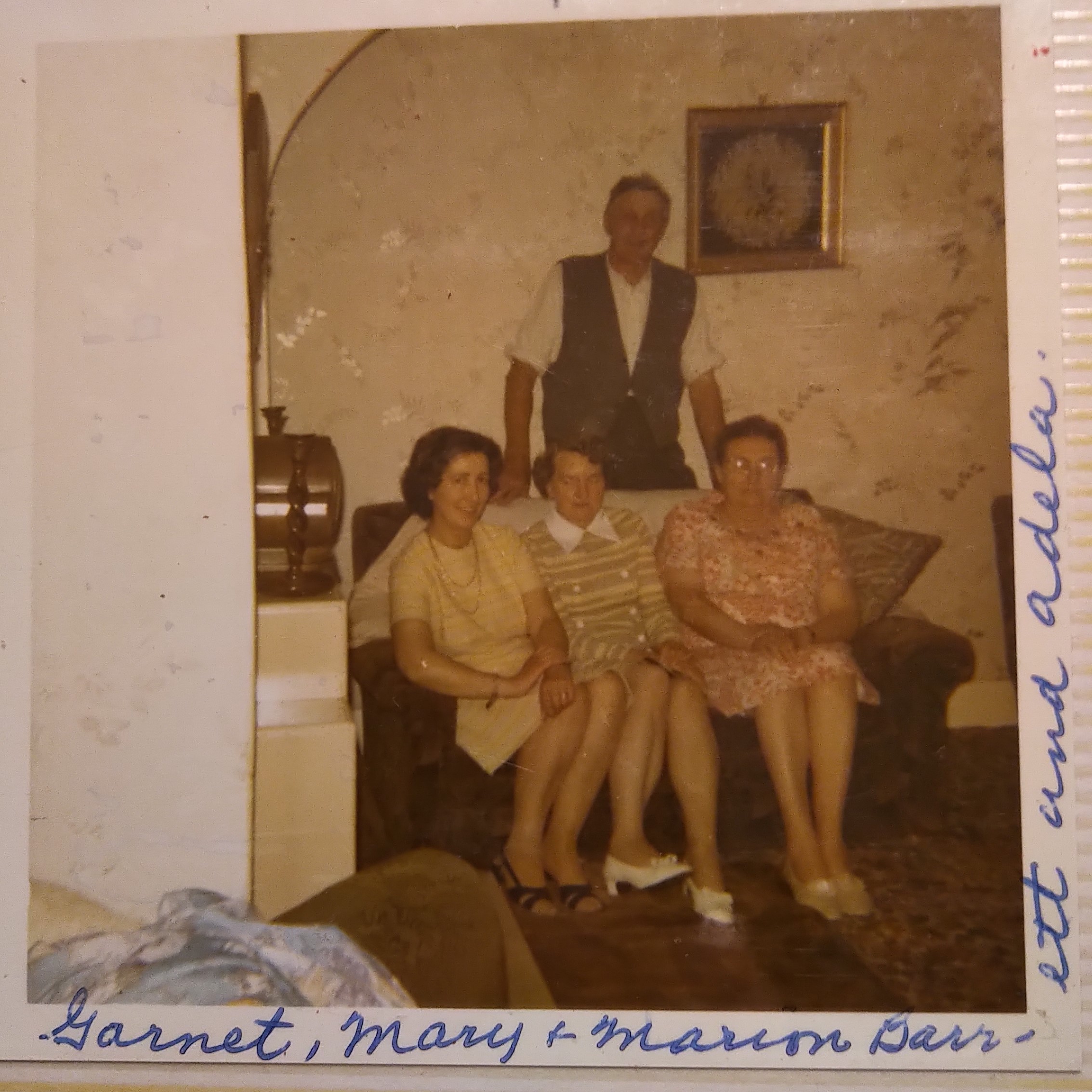
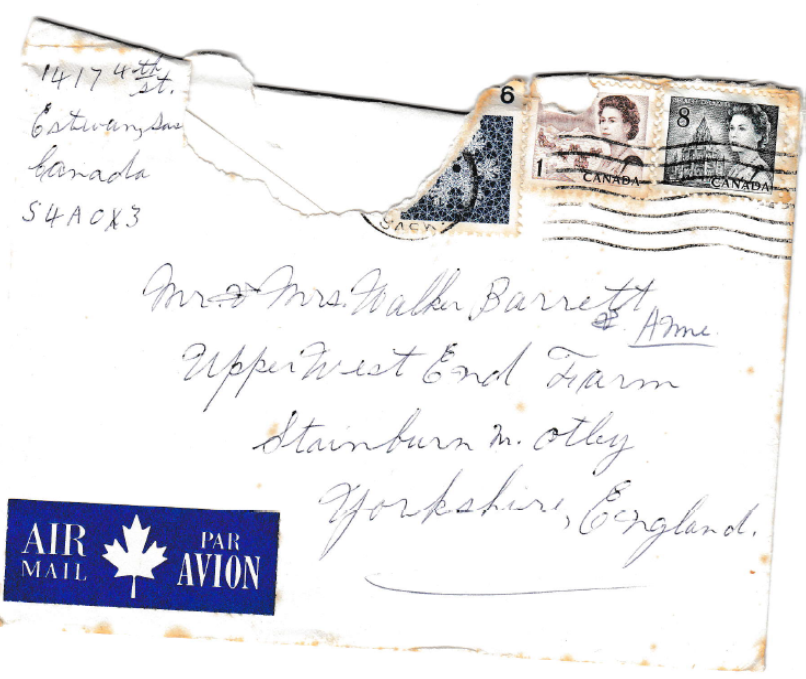
I preserve through connections with those who are connected to the things I wish to preserve. I’ve sent photos and other documents to those for whom they have meant more (my favourite is the Kings – friends of my great grandparents, Mary Wellock & George Thomas Barrett) but I had no idea how beautiful this could be until I reached out to my Canada “cousins”. I had a preserved image of their life here and of how their descendants would be. Some has proved to be true, much hasn’t – even the surname Wellock sounds different. In mingling our histories we created a new shared narrative rather than preserved the old and it has ensured that knowledge of our shared ancestors is recounted in future.

The Wellock homestead has disappeared, but in its place a new memory of distant relatives meeting to be preserved for future.

A road trip to Estevan

In 1907 two brothers from Greenhow Hill, Yorkshire packed up their belongings (together with one spouse and two children), said goodbye to their parents and sailed for the flat-land Canadian prairies.

115 years later, inspired by tales of my Grandpy’s cousins, I finally made it to Canada with one must see destination: Estevan, Saskatchewan.

Yep, you read that right. The stunning scenery of the Rocky Mountains, Niagara Falls and Cape Breton, the metropolitan highlights of Toronto and Vancouver and the long-distance sleeper trains were all much lesser priorities than a road trip to rural south Saskatchewan.

Why? Because David & Major Preston (the two aforementioned brothers) also said goodbye (and “please stay in touch”) to their seven siblings including their youngest sister Mary, my great grandmother and true to that promise they did.

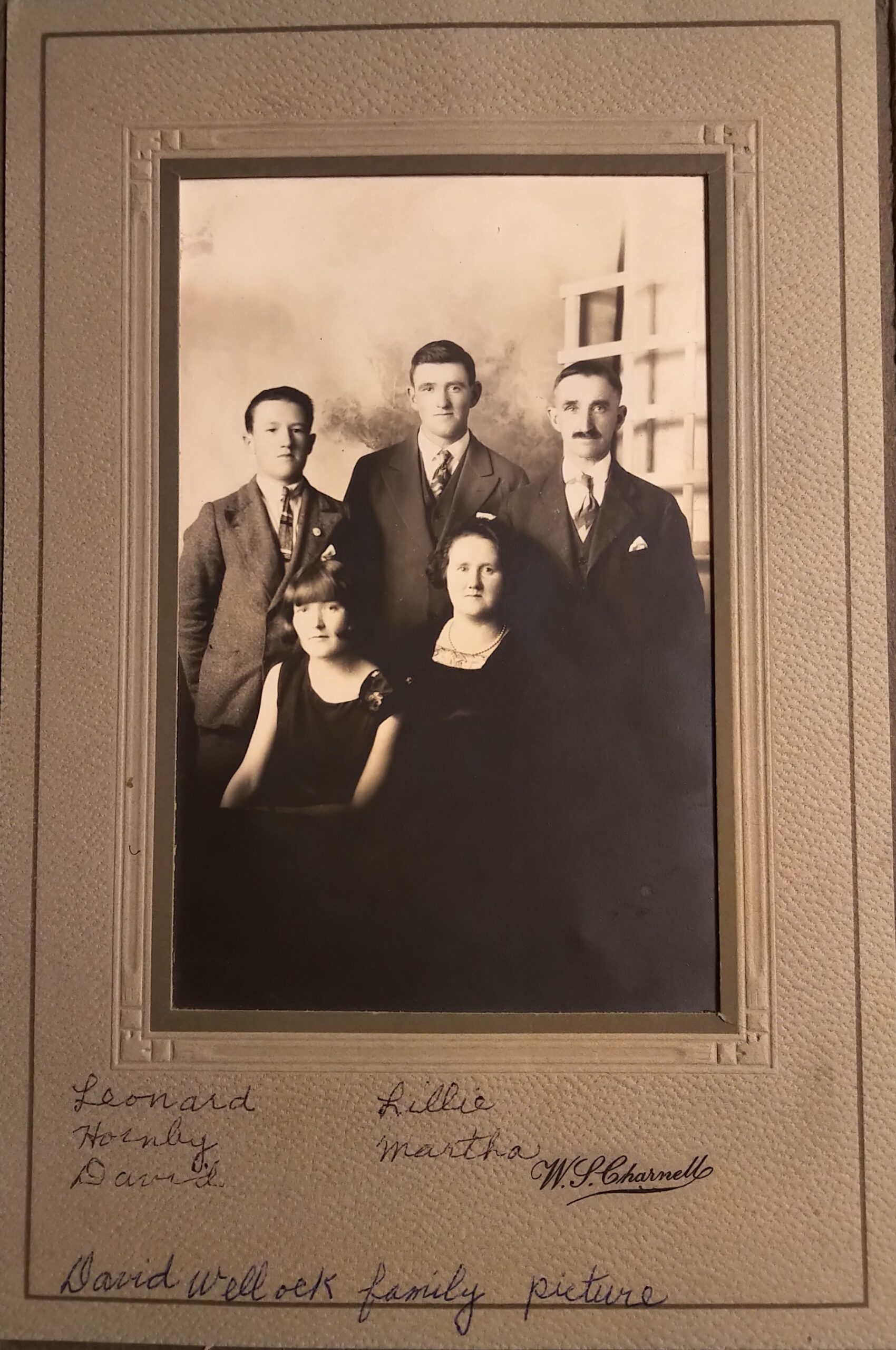
David Wellock with his wife Martha (Clark) and their three children, Hornby (1905 – 1982), Lillie (1908 – 1989) and Leonard (1913 – 1981). Hornby had two sons, Keith & Lloyd. Keith & his daughter Chantelle took me on this road trip to Estevan. Keith Wellock’s collection.

It is here I must express my enormous gratitude to Chantelle & Keith, my third & second-once-removed cousins. Despite never having met they offered to pick me up from Lake Louise, show me around Estevan and drop me off at Saskatoon, a road trip of close on 2,000 km of driving. And along the way offered me an insight into David’s life & family over here in Canada.

All road trips start somewhere and for me this was when Keith brought out the photo albums and started to tell the story of David & Major’s families here in Canada spotting similarities and handing me a few more puzzles to solve. Such a treasure trove and will no doubt feature in many future Wellock blogs.

Imagine my delight when I turned the page to spot Nana & Grandpy during a visit Hornby made to Yorkshire.

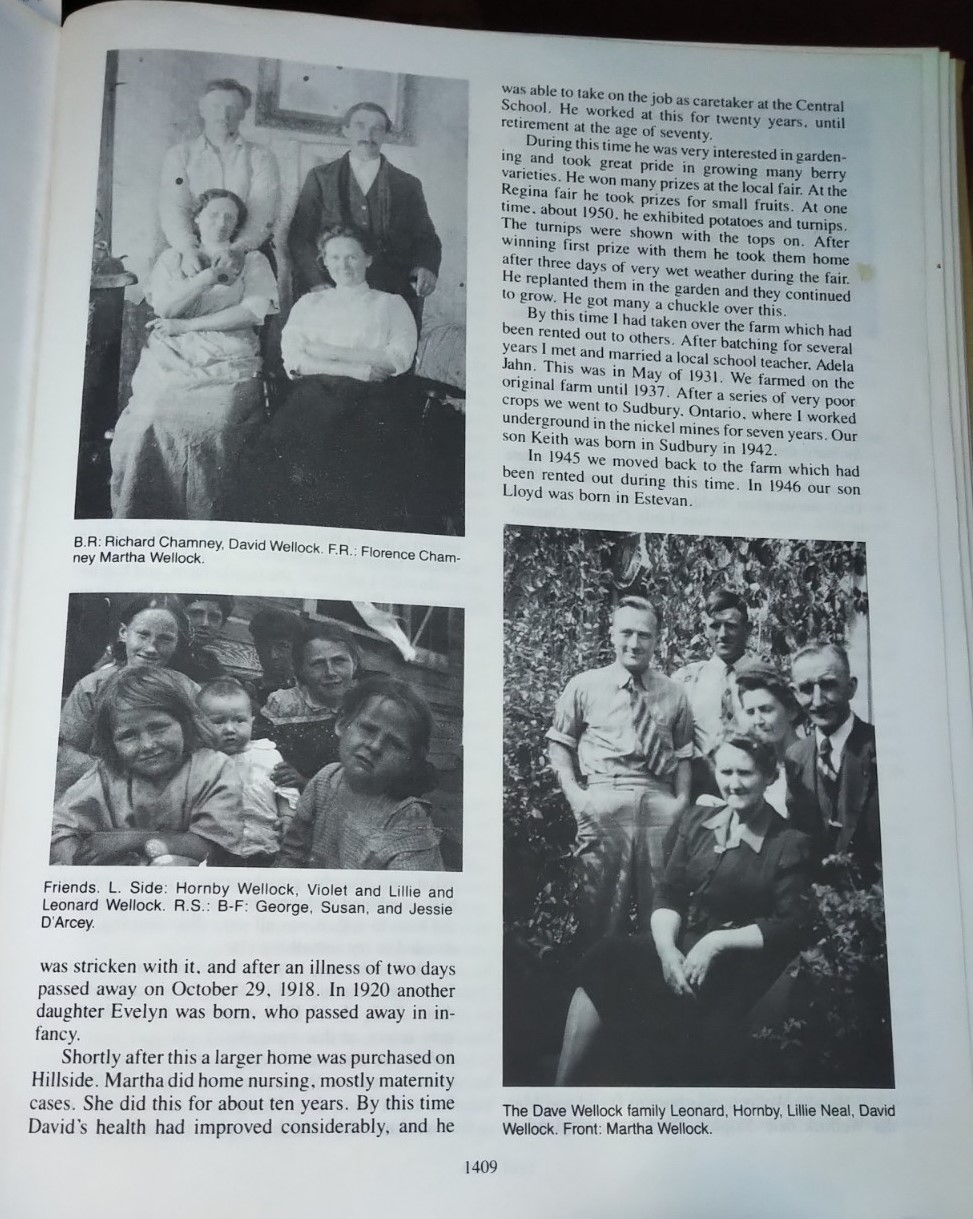
Keith also had two large books entitled “A tale that is told.” in part authored by his mother, covering Estevan’s history from 1890 to 1980.  What a wonderful archive.

From here I learnt a little more about how the brothers ended up in Estevan. David’s wife, Martha Clark, had a sister called Sarah who, together with her husband, Joe Philips, had emigrated to Estevan in 1901. The history book notes that: “About 1905 or 1906 he returned to England under the sponsorship of the CPR and recruited 250 – 300 new settlers for the West.” He clearly persuaded his brothers-in-law that here was a land of opportunity. Although there was also a suggestion that Major and/or David may or may not have pushed their father into a horse trough full of water which may or may not have precipitated the move! (There’s more about their earlier life at Toft Gate here).

A page from the Estevan history book “A tale that is told” describing David & Martha’s life. The photo on the bottom right is a copy of one I also have and must have been sent to my great-grandmother. Own photo.

The next day we drove the 900km to Estevan. For much of the time we were following the single train tracks. In 1907, the train was the only option. In 2022 it’s not even possible to travel to Estevan by train. The time spent driving meant many more stories shared and gave an incredible sense of scale.

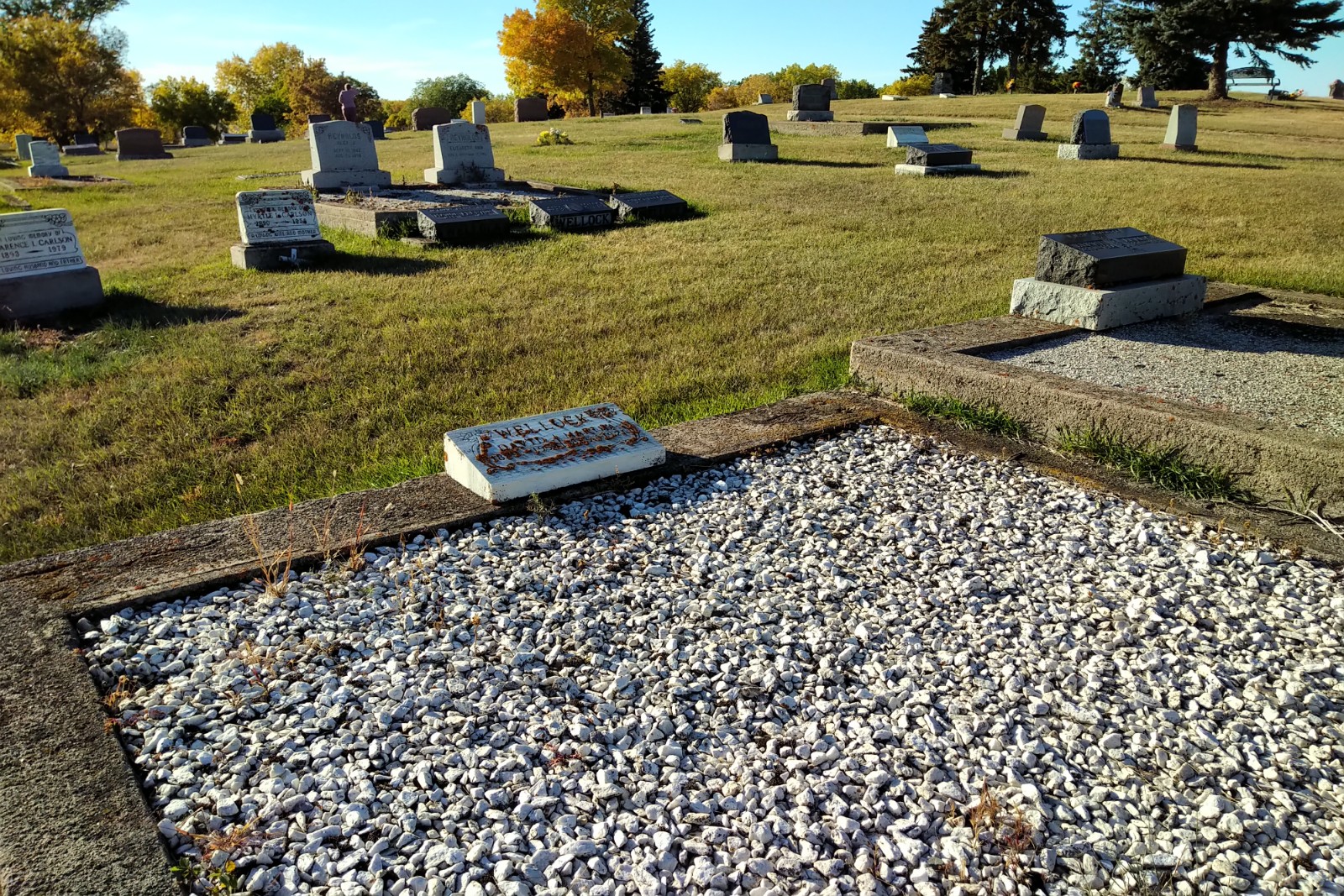
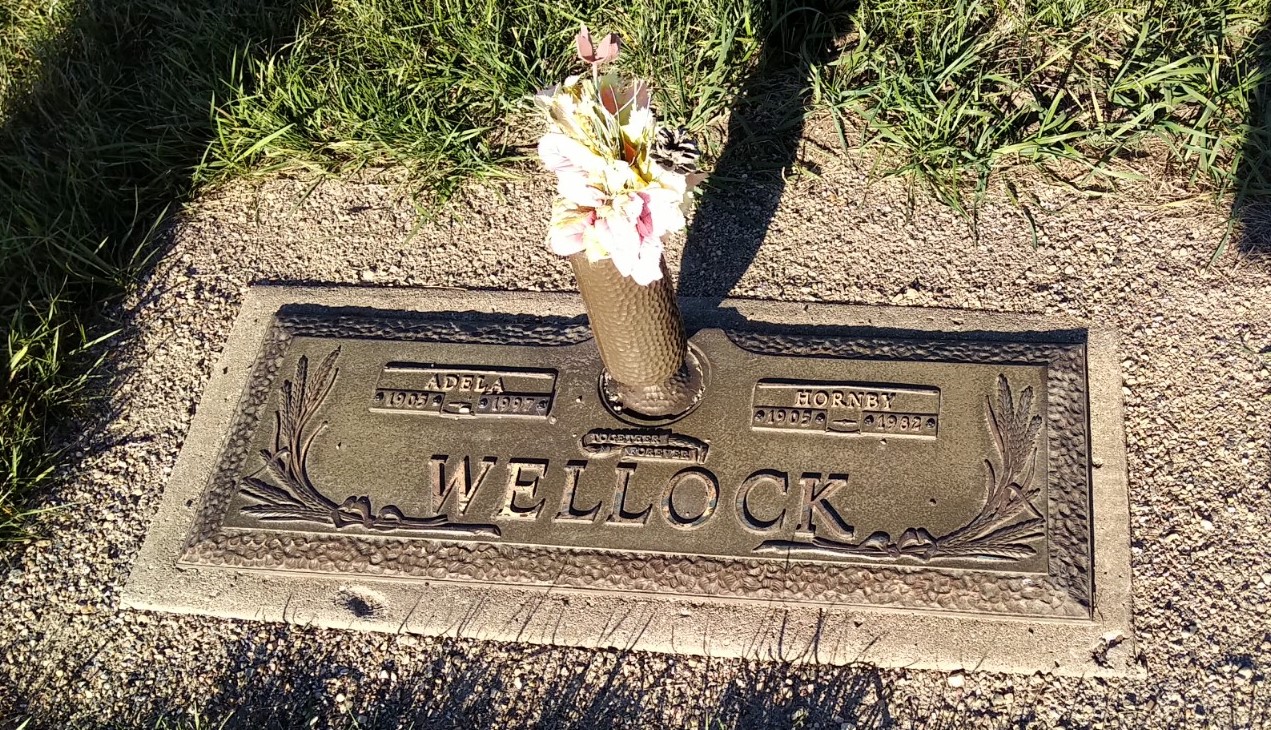
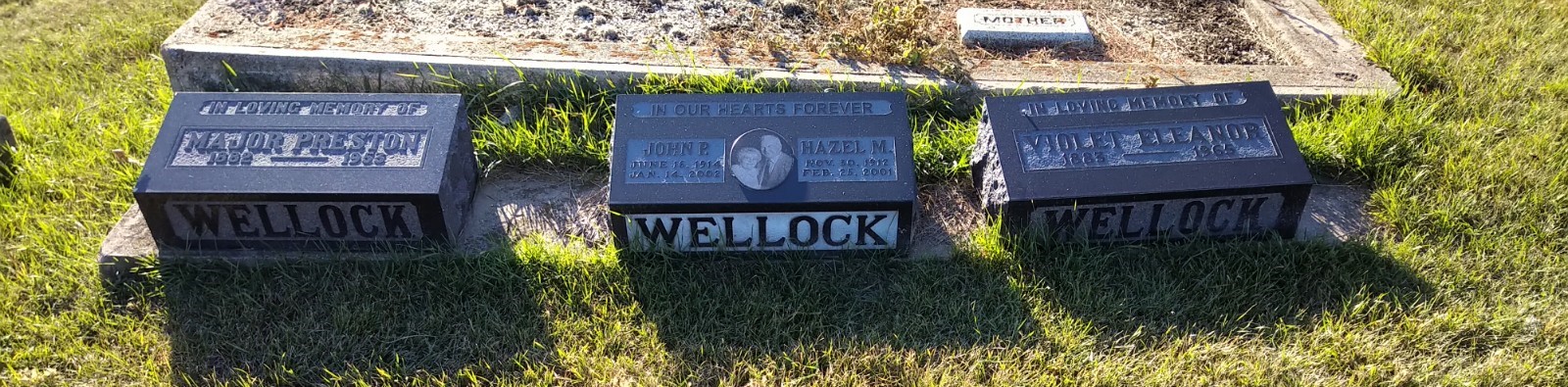
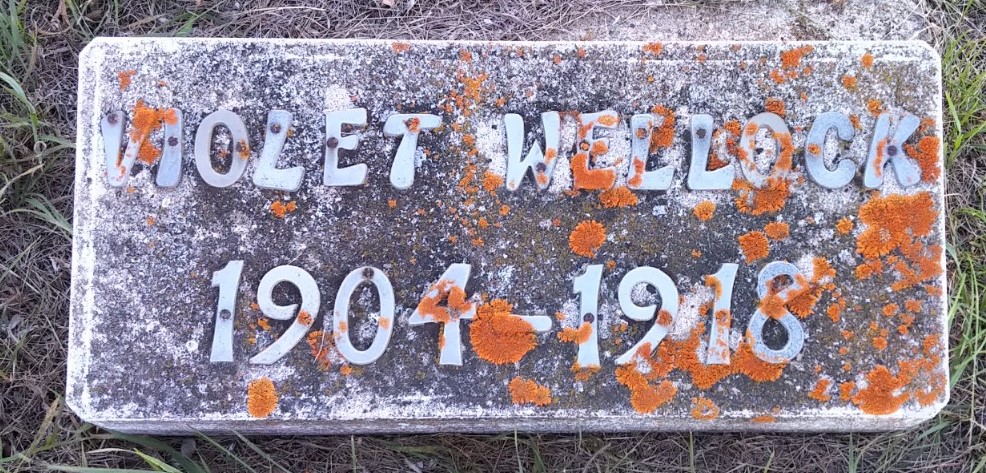
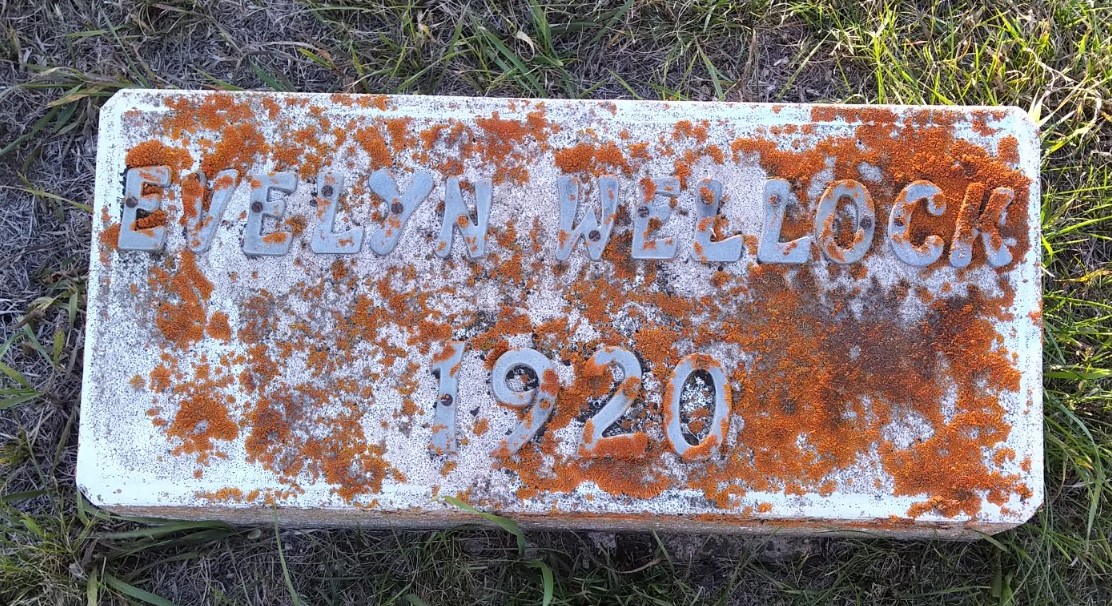
Finally, we reached Estevan. Less than 20 km north of the border, it’s as much an oil & mining town now as it is a farming one. It doesn’t really look much like the town it was then, but with Keith’s help (and that of “A tale that is told”) we were able to uncover so many of the early places. We visited the graveyards first. The majority of the family are buried in the original Estevan City Cemetery although Hornby (David’s son & Keith’s father) is buried in the newer Souris Valley Memorial Cemetery. I took a stone from David & Martha’s grave which I hope to place on that of my great grandmother to re-connect the family.

Major Preston & Violet Eleanor (Boothman) Wellock together with their son, John Preston & his wife Hazel (Rae).

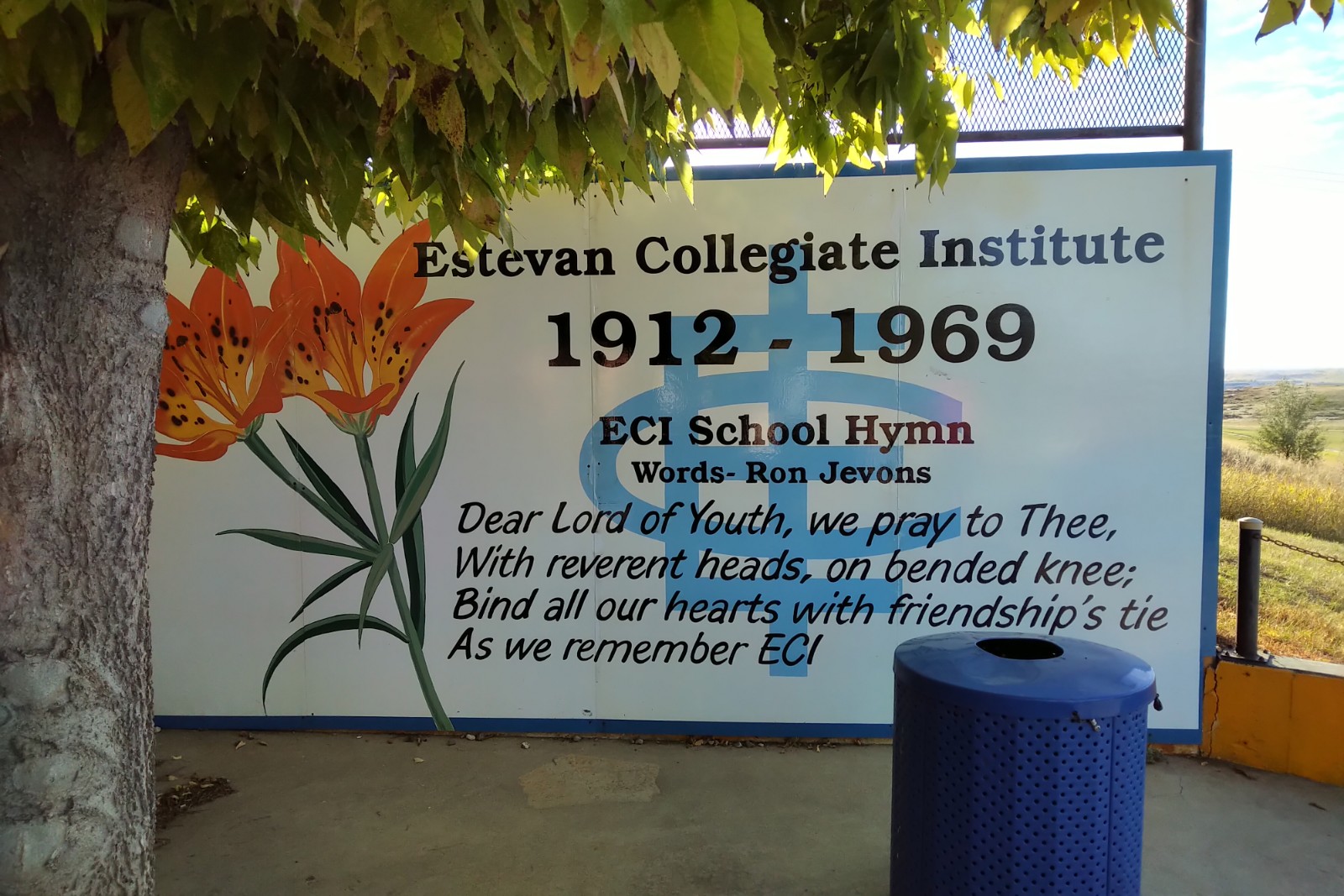
In town we found a wonderful memorial to the Estevan Collegiate Institute, the main high school in the time from 1921 to 1969. The memorial also listed staff and we spotted Hornby Wellock who had taken a janitorial job there in 1957. Homesteading just did not pay enough to keep a family.

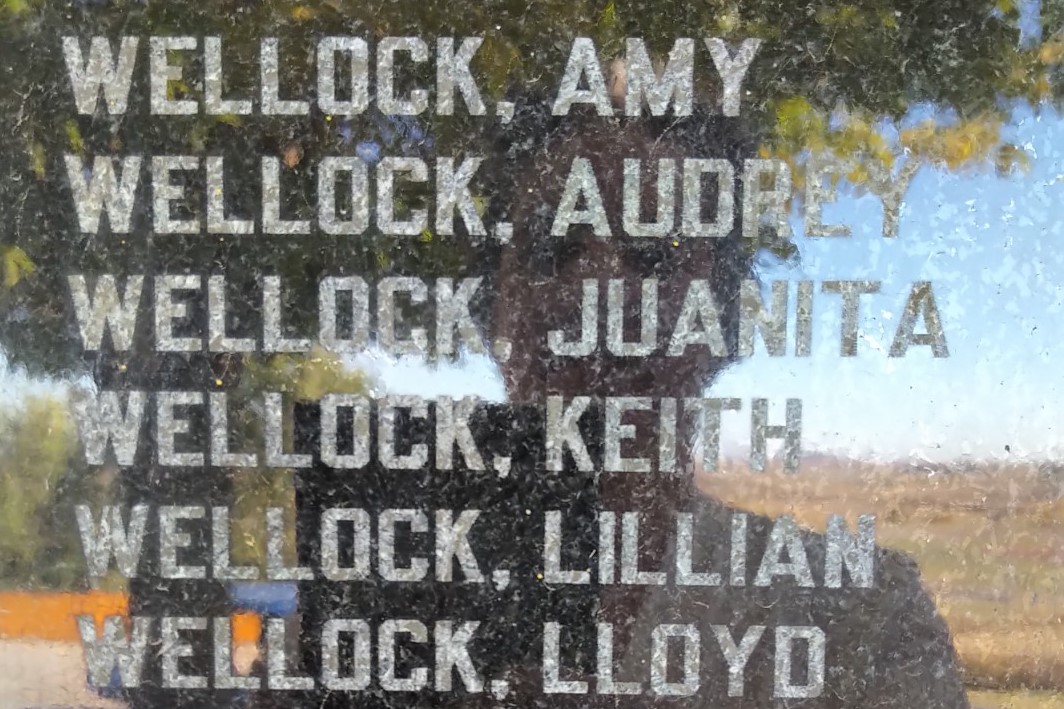
The Estevan Collegiate Institute memorial. Such a wonderful collection of family names. Own photo.
Estevan collegiate institute memorial. Lillian was the daughter of David, Keith & Lloyd the sons of Hornby & Amy the daughter of John. As to who Audrey & Juanita were – well that’s another puzzle for me to solve!

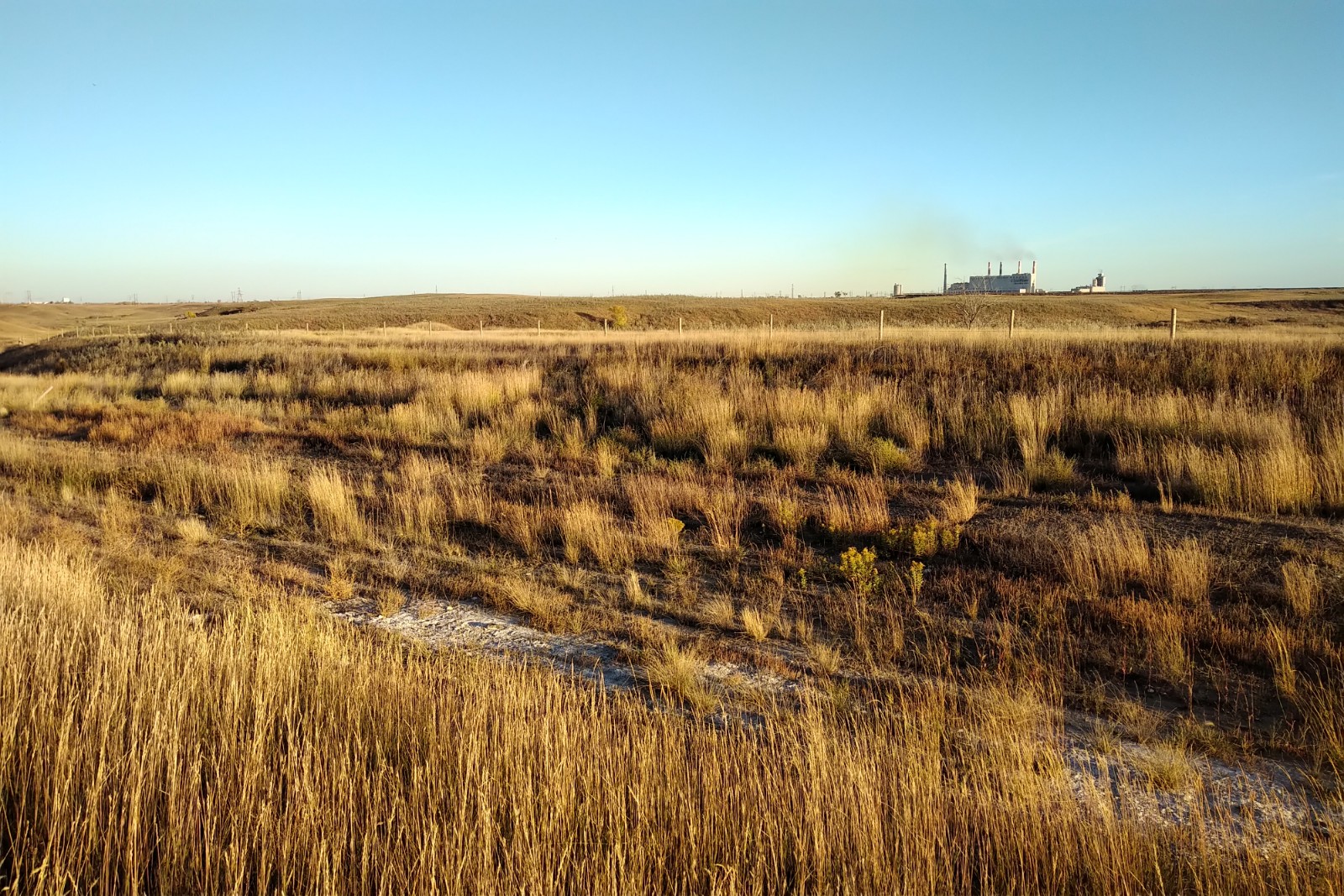
We visited some of the land owned by the Wellock family. Major’s son, Johnny, had sold some of his ranch to allow a power plant to be built – a reflection of the changing industry here.

John Wellock’s land, now the site of a power plant. Own photo.

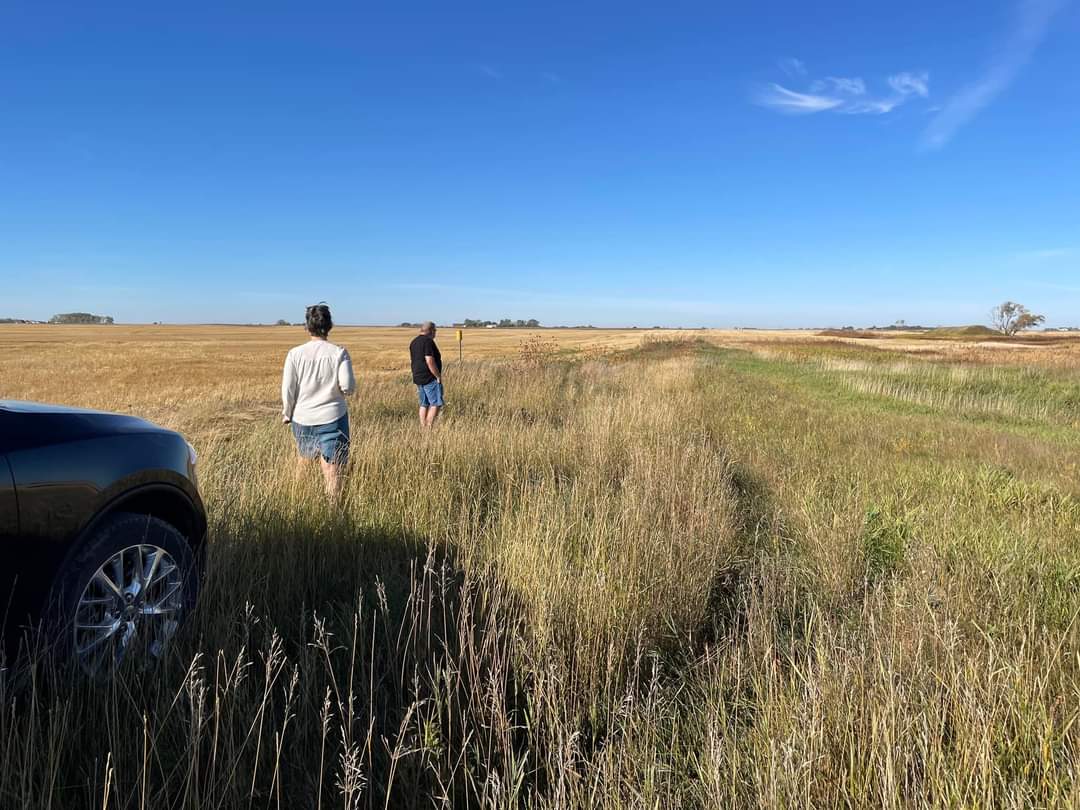
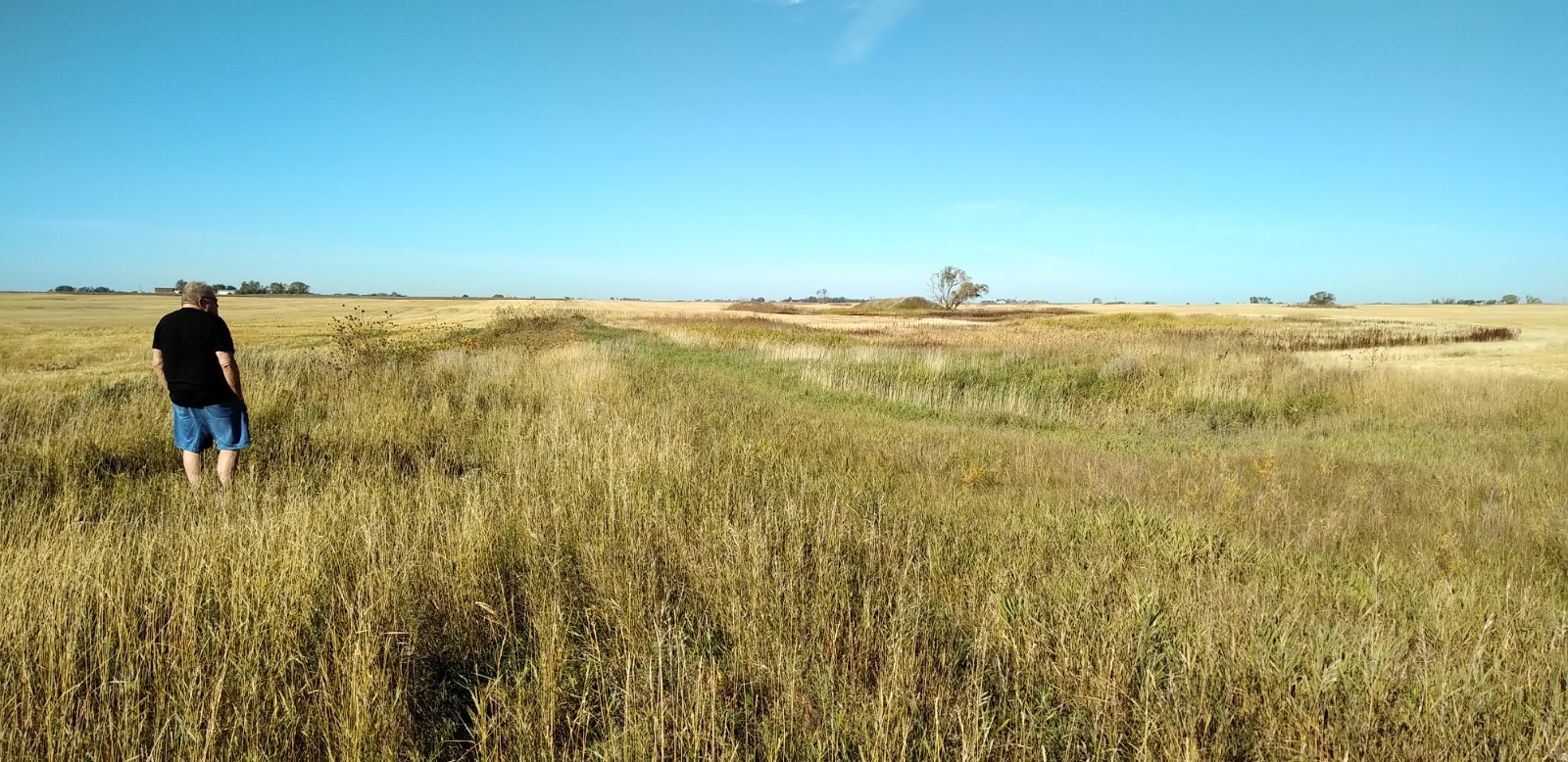
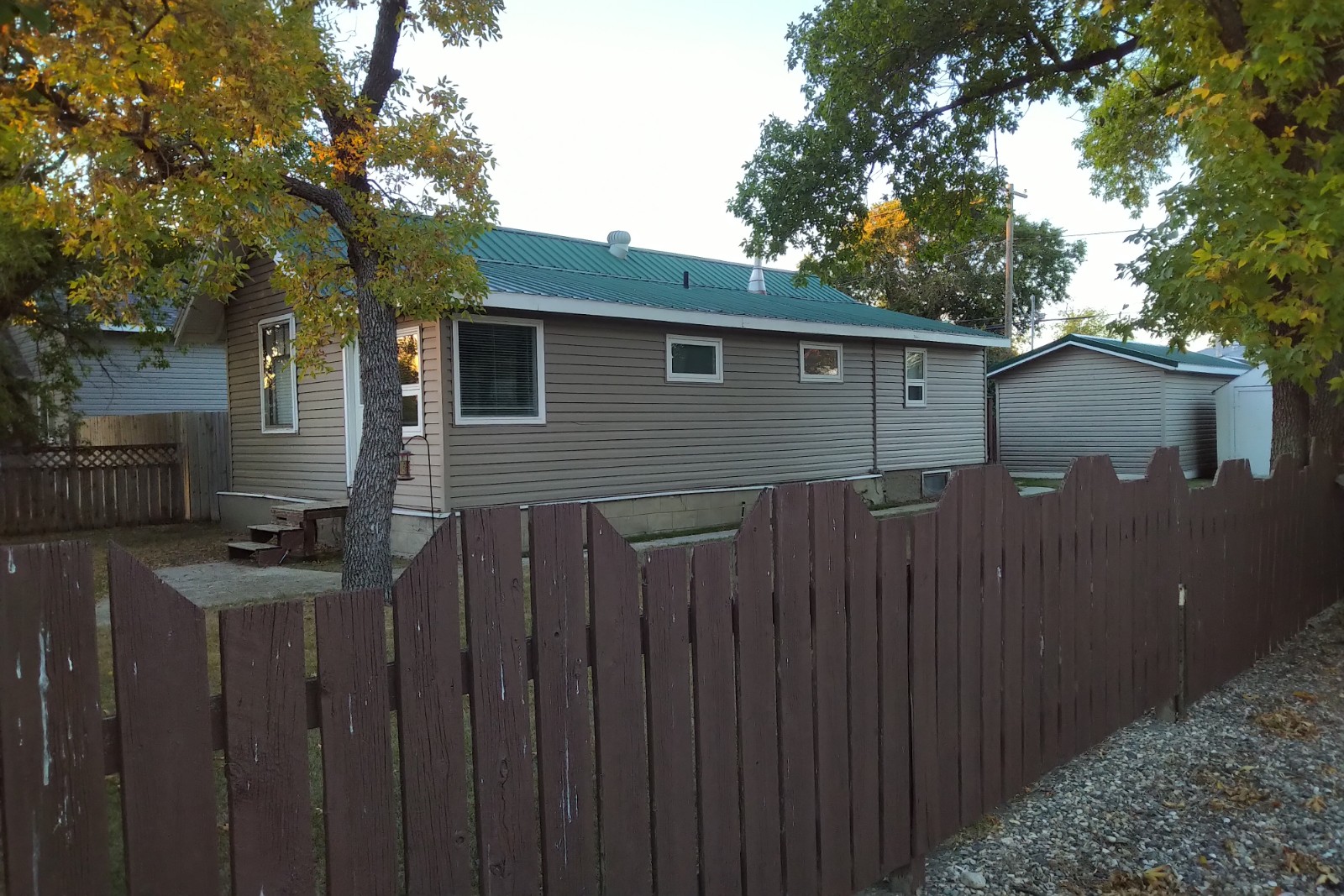
David (and then Hornby)’s homestead had been absorbed into another larger farm – the only way to make agriculture pay. Standing at the edge of the land gave me a real sense of how different the farms are here to back at home. No walls, no fences, no hills, no green grass. No sheep – Grandpy would not have been content!

Site of David & then Hornby Wellock’s homestead from 190[7] to 1968. with Keith, Hornby’s son, looking on. Keith is standing on what was the lane, the house was just over to the right.

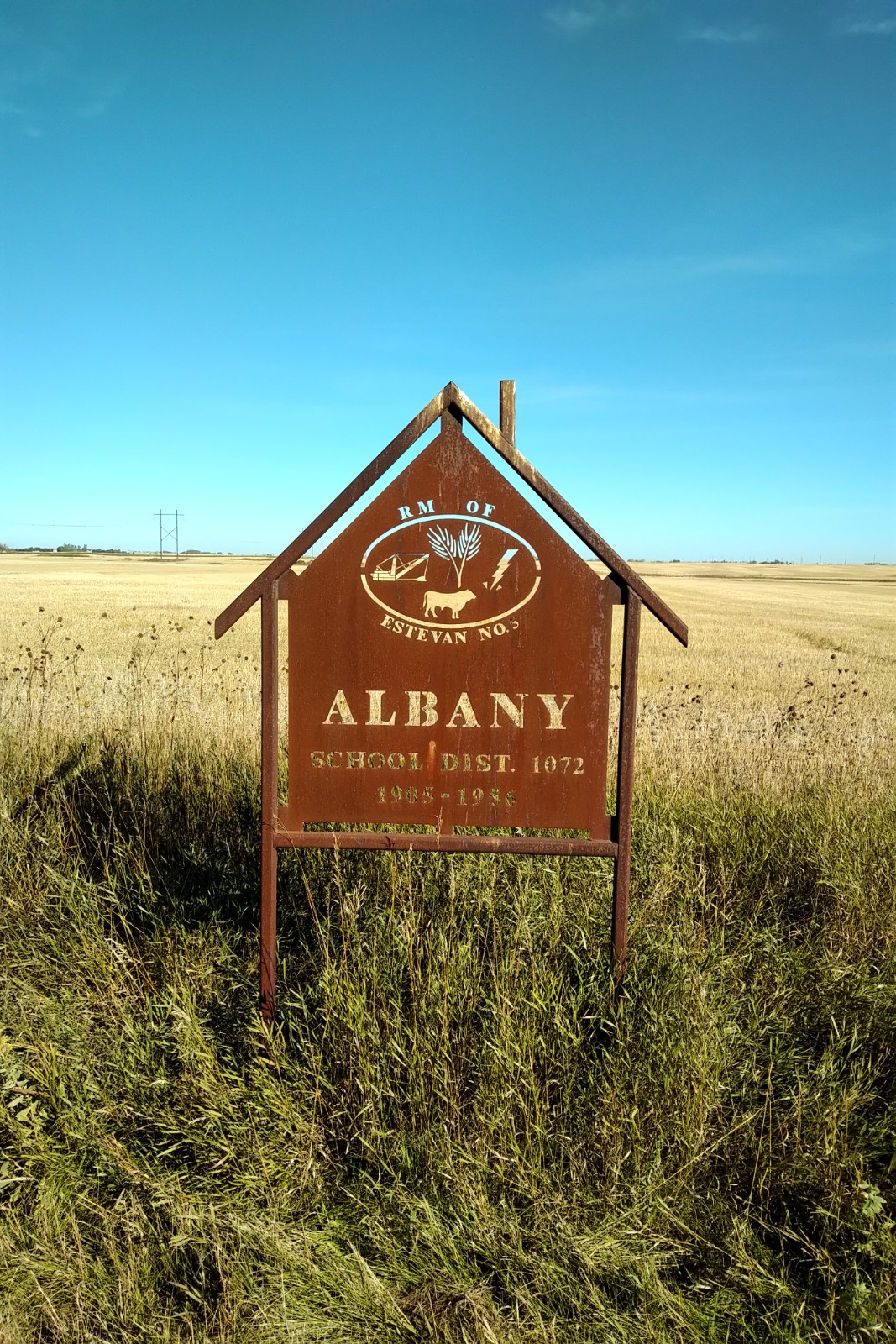
The local farm school of Albany had long since disappeared, closing whilst Keith was a child, but we found a lovely sign marking the spot. It reminded me of my Mum’s primary school where she was also one of seven. It too closed, but unlike the Albany farm school, it was made a stone and the building still stands.

Location of Albany farm school. Own photo.

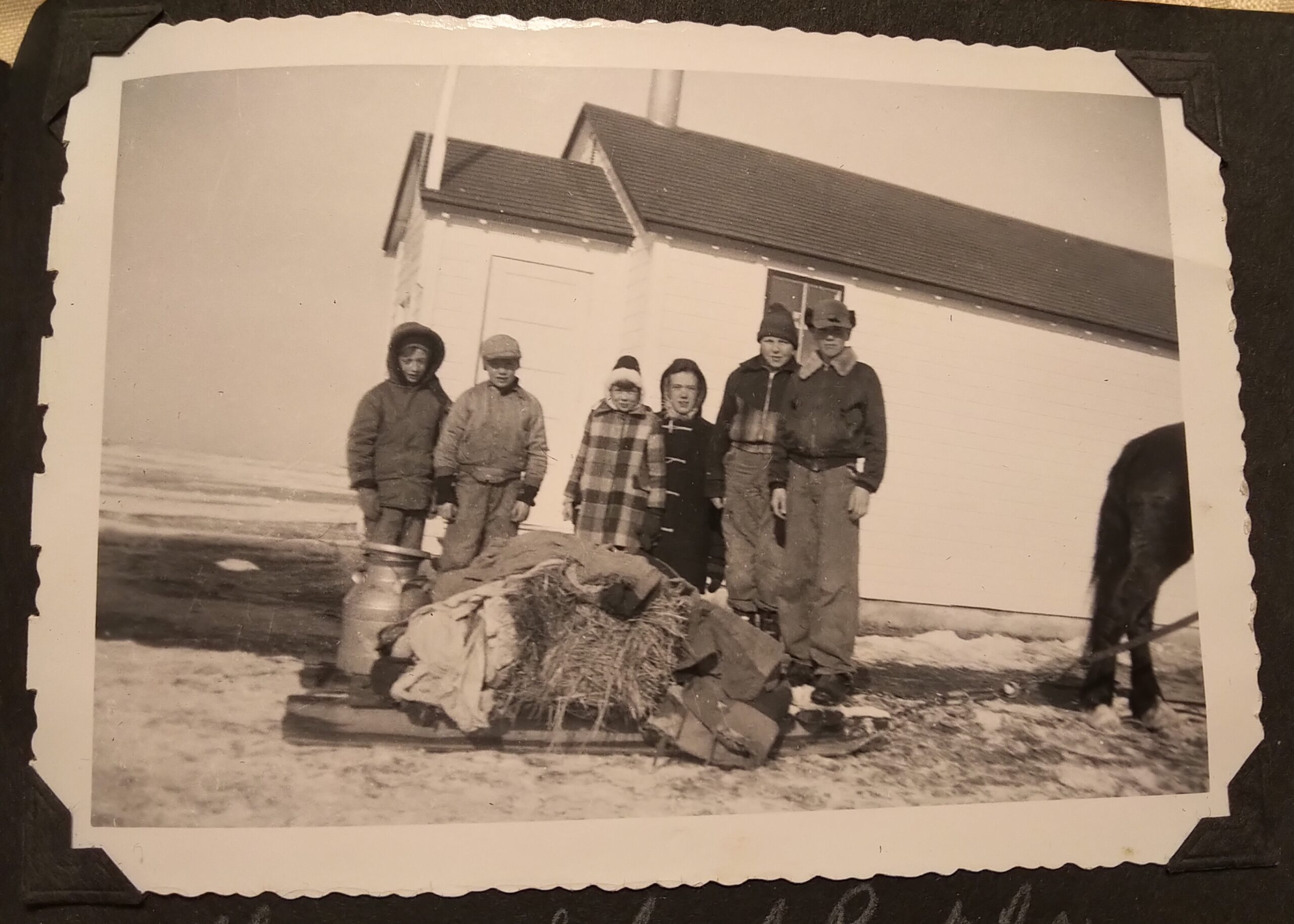
Basking in the September sun with prairie fields as far as the eye could see, it was hard to imagine the children needing a sled to get to school.  

School friends standing outside the school building with their school winter transport in front. Keith Wellock’s collection.

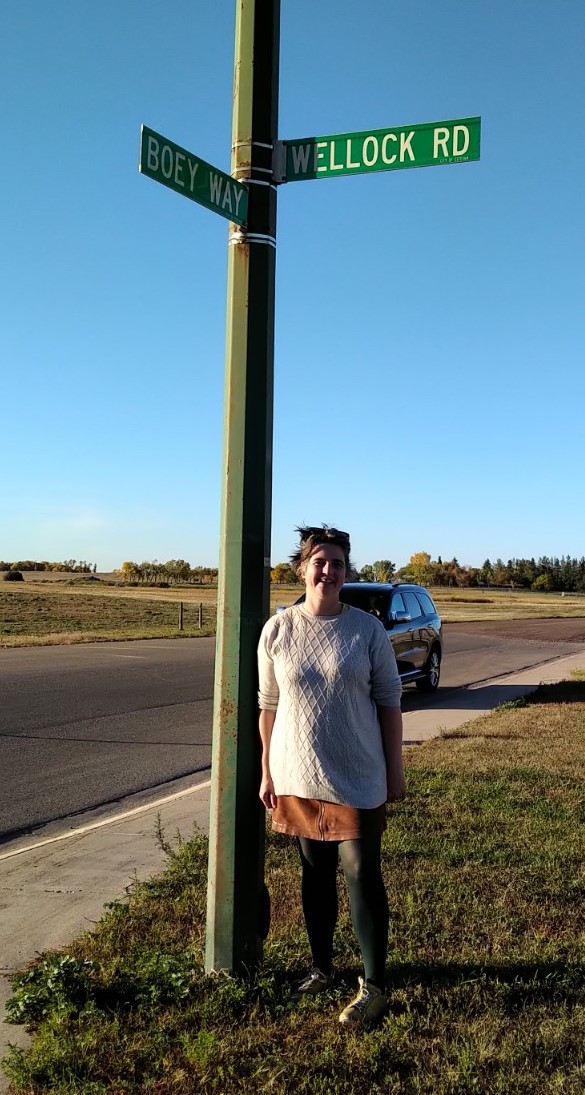
And finally, one last treat – a whole road named for the Wellocks, possibly the only one in the entire world!

Stood in front of the sign for Wellock Road, Estevan. Own photo.

At the end of the road trip I have such wonderful memories, many more family photos and stories and above all, lost relatives who have become found friends.

With much gratitude to Keith & Chantelle for the road trip to Estevan, to my Great Grandmother Mary for caring so much of her brothers and for the David & Major Preston Wellock, the brothers who emigrated to Canada and were the encouragement and inspiration of this wonderful road trip. Thanks too, to Amy Johnson Crow, the 52 ancestors in 52 weeks challenge hint this week of road trip was particularly apt.